Get a specialist assessment before changing a gown
Some wedding dresses can be recolored, but suitability depends on the complete gown. The brand, white appearance or main fabric alone does not answer the question. A specialist should assess fibers, lining, seams, lace, boning, closures and decorative details before treatment.
Gather labels and photographs. Provide the composition and care instructions, plus close-ups of beads, sequins, embroidery, appliqués and adhesive details. Different components may develop different shades, remain unchanged or be damaged by the proposed process.
Choose a realistic target. Dye adds color to the starting shade. A darker target may be more practical, while pale, bright or precisely matched colors can require careful preparation and sampling. Screen images are useful references but do not establish an exact match on fabric.
Discuss the risks to fit and finish. Heat, water, movement and chemicals can change dimensions, texture or details. Ask whether a representative sample is available and what it can demonstrate. If no sample can be tested, decide whether the uncertainty is acceptable for an irreplaceable gown.
Compare complete proposals. Ask about cleaning, repairs, sampling, dyeing, finishing, estimated completion, shipping and aftercare. Confirm the target reference, acceptable variation and remedy policy in writing before authorizing work.
If dyeing is unsuitable, consider alteration, separate colored accessories, decorative additions or preserving the original gown. The dress dyeing service directory can help you find providers to assess the item; a listing does not guarantee acceptance or a particular result.
Ready for an assessment? Compare professional dress dyeing services and review the gown checklist, or request a dress dyeing quote with your photos and labels.
Can you dye a wedding dress black?
Some gowns can be dyed black, but a white starting shade does not guarantee an even black result. Decide whether charcoal, lighter lace, contrasting stitching or a changed fit would still meet your goal. Ask the specialist to assess the complete gown rather than approving only its shell fabric.
Choose an acceptable sample result
List each layer and trim, including lining, netting, cups, boning, closures and decorations. Ask which can be tested using genuine spare material. A shell swatch cannot establish how glued details or the assembled dress will behave. Agree on testing charges and whether further work requires separate approval. Judge the dry sample in daylight with your accessories. Do not pre-bleach a white gown simply because you want black.
Prepare a black-gown assessment request
“I want to change this gown from ivory to black. The shell label says [fiber]; the lining is [fiber or unknown]. It has [beads, boning, cups and closures]. My event is [date]. I can accept [shade or contrast] but need to preserve [fit or detail]. Can you assess all layers, explain testing and quote the complete work?” Replace the brackets with actual details. This template does not promise acceptance.
Coordinate alterations and partial color
Ask the dyer and alterations specialist to agree on the work sequence and who removes or reinstalls parts. Allow a return fitting and keep measurements before processing. If you want only the skirt recolored, define the boundary and ask whether it can be separated or treated without affecting adjacent parts. Discuss reassembly, lining contrast and total cost before committing.
For an example of a provider’s assessment process, see Renegade Bridal’s gown dyeing service. Compare your options using the free dress planning tools and US alterations directory.
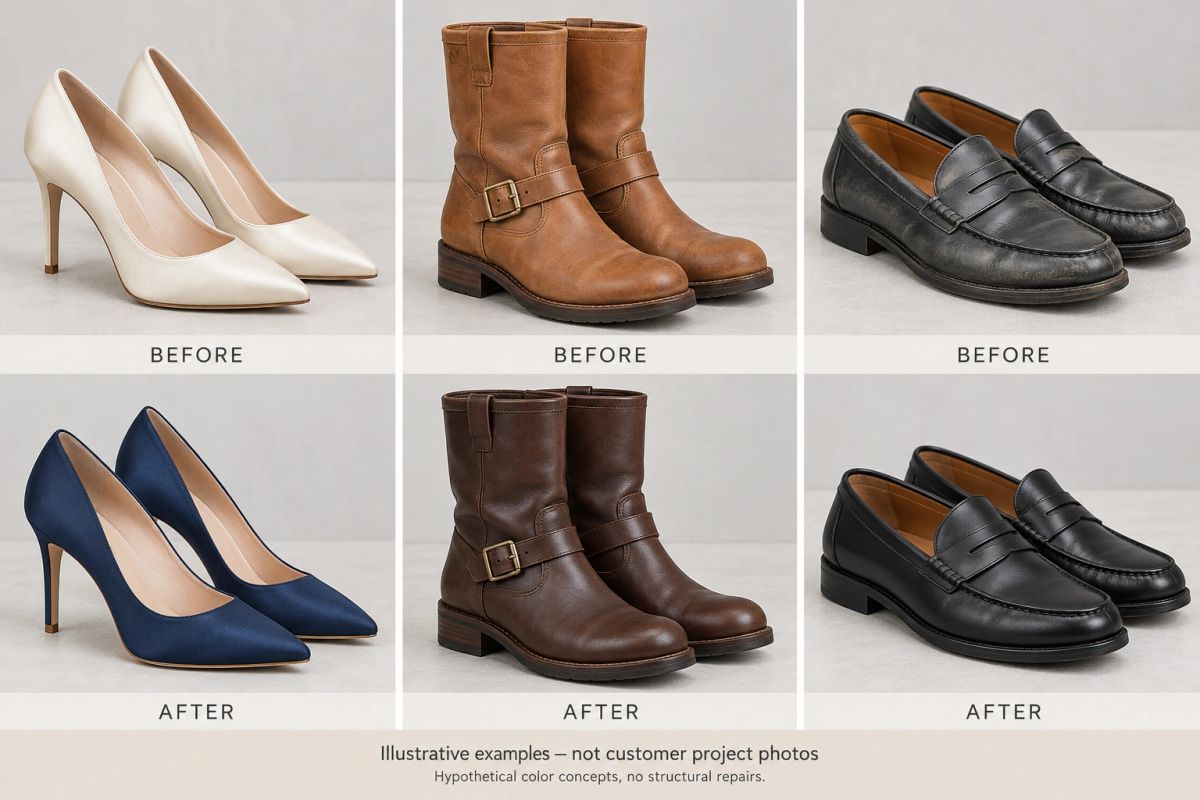
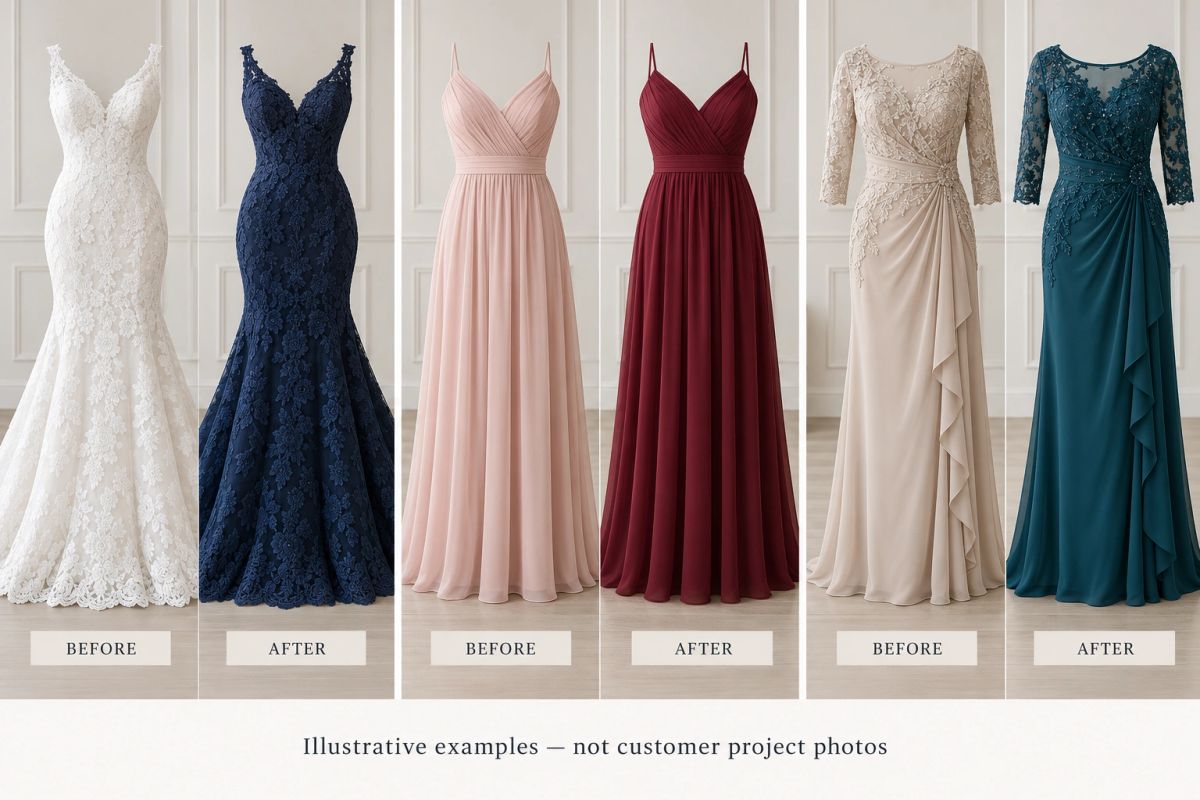
Before & after dyeing color ideas
Actual results depend on the item and treatment. A specialist must assess the complete item, fiber content, existing color and finish before confirming a suitable treatment.
Dress dyeing
Shoe dyeing