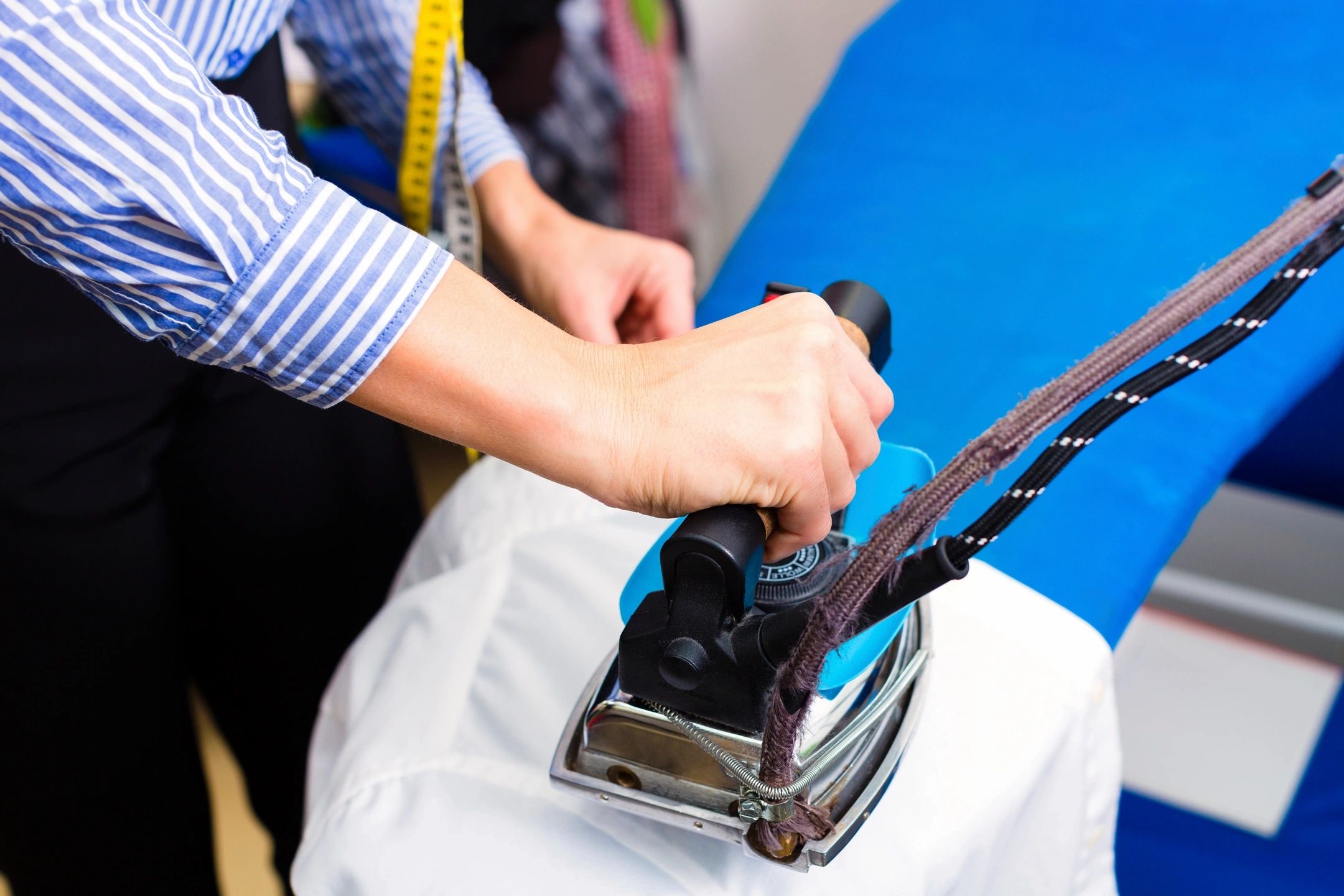
Many cotton garments can be ironed
Check the complete garment’s care label first. Cotton content alone does not establish the correct setting: blends, coatings, prints, embellishments and trims can impose lower limits or prohibit ironing.
Prepare before pressing
Check the iron’s instructions and temperature controls.
Use a clean, stable ironing surface.
Check the soleplate for residue.
Test a concealed area with the permitted setting.
Protect prints, trims and surfaces that may mark.
Use the allowed heat and moisture
Start within the care label’s limits. Use steam or light moisture only where the label and iron instructions permit it. Keep the iron moving appropriately and avoid leaving it stationary on the fabric.
Work in manageable sections
Smooth the fabric before pressing. Work around seams and details without stretching them. A suitable pressing cloth or pressing from the reverse may help protect the surface, but does not make excessive heat acceptable.
If the fabric marks or changes color
Stop and allow it to cool before reassessing. Do not assume a scorch mark can be hidden successfully with dye. Heat damage may affect the fiber itself and the way it accepts color.
After a color change
Complete the prescribed rinse and wash process before pressing a newly dyed garment. Check the dry result and continue to follow the care label.
Planning a color change?
Request a professional dyeing assessment with photos, fiber labels, the current shade and target color. For a suitable home project, our supplies guide includes product limits and Amazon affiliate disclosures.