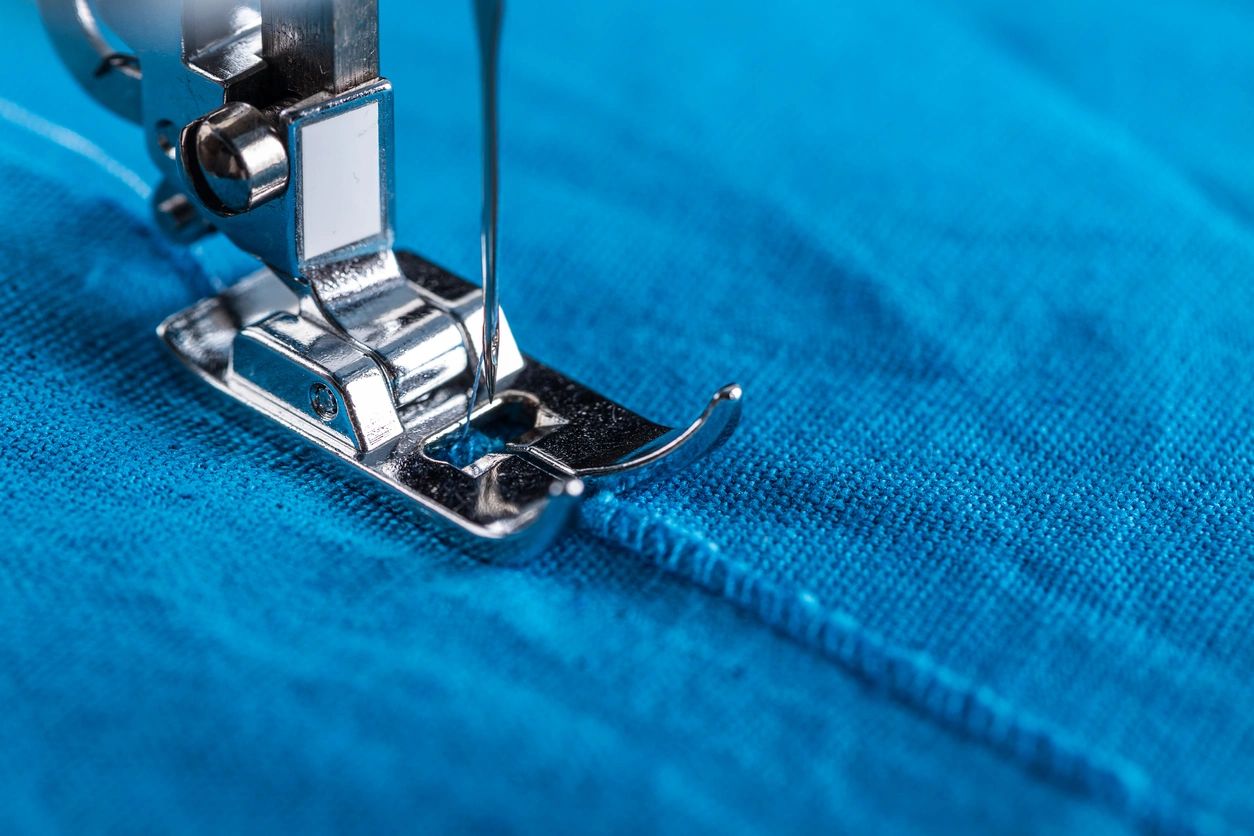
Match the needle to the machine first
A sewing-machine needle must use the system specified by your machine. Hand-sewing needles are a separate category and should not be mixed into a machine-needle selection guide.
Choose type for the material
- Universal needles serve many everyday applications.
- Microtex or sharp types may suit tightly woven materials.
- Jersey and stretch needles address different knit applications.
- Jeans needles are designed for suitable dense fabrics.
- Leather needles use cutting points for appropriate leather applications.
- Embroidery and topstitch needles address specific thread and stitch needs.
Use the manufacturer’s material chart. Do not assume a cutting-point leather needle is suitable for ordinary woven cloth or a knit.
Size also matters
Needle size must accommodate the thread while making a suitable hole in the material. A larger needle is not automatically the answer to every skipped stitch. Check threading, installation, needle condition and machine settings too.
Test before sewing the project
Use scraps with the same layers, thread and stitch as the finished seam. Inspect both sides for skipped stitches, puckering and damage. Replace a damaged or bent needle and follow the machine instructions when installing it.
Manufacturer reference
The SCHMETZ needle guide explains types and selection. Use your machine’s manual for the compatible system and installation method.Explore more sewing and textile guides for project planning.