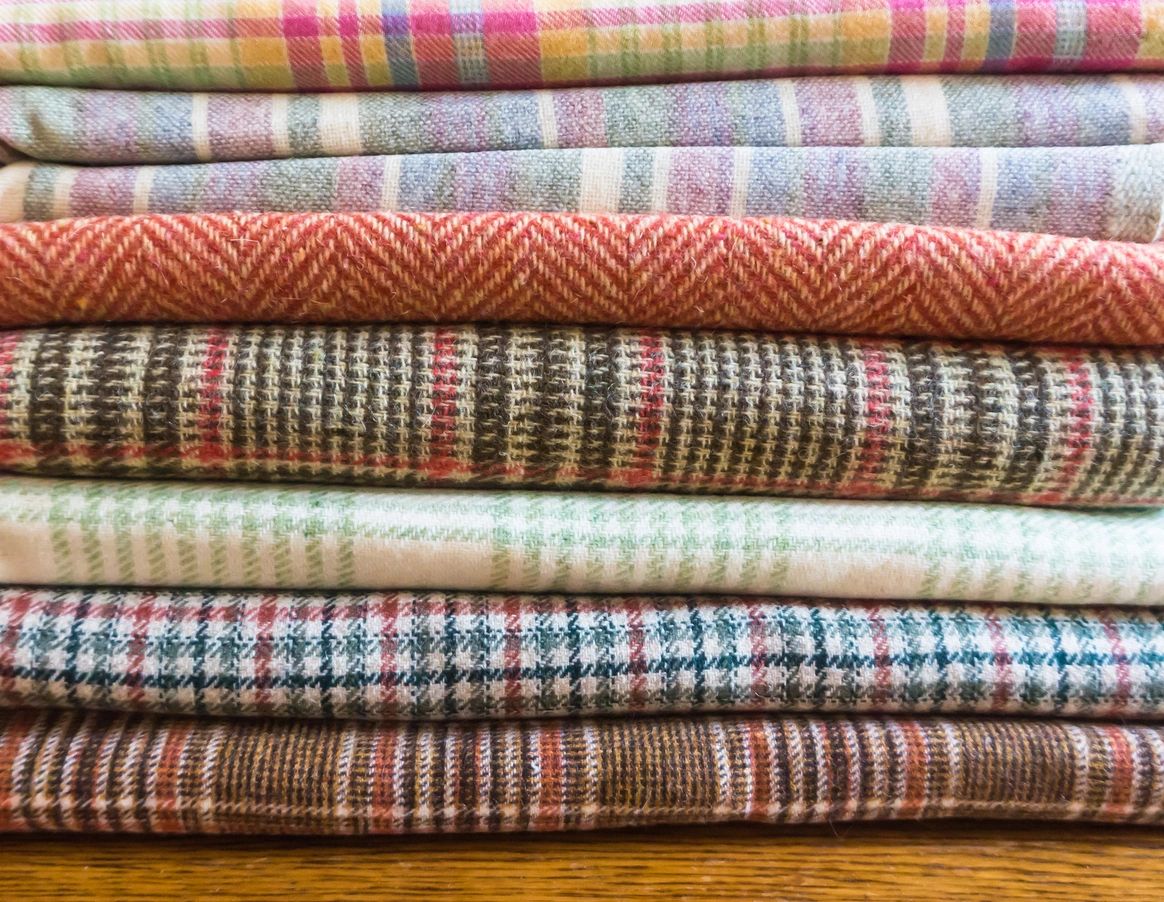
The three foundational weave families
A woven fabric interlaces warp and weft yarns. Plain, twill and satin describe different arrangements of those interlacings. They describe structure, not fiber content.
Plain weave
In the basic pattern, a weft yarn alternates over and under successive warp yarns, with the next row reversing the arrangement. Yarn size, spacing and finishing can produce very different fabrics within this family.
Twill weave
A progression of interlacings creates a diagonal pattern. Denim and gabardine are familiar examples. Twill is not automatically heavier or more durable than every plain weave; yarn and construction details still matter.
Satin weave
Longer floats and spaced interlacings create a relatively smooth surface. Floats can be vulnerable to snagging. Satin can be made with silk, polyester or other fibers, so the name alone cannot determine a dye recipe.
Other woven structures
Dobby and Jacquard equipment can create patterned structures of different complexity. Pile fabrics introduce raised loops or cut surfaces. These terms may overlap with the foundational weave families.
What to check for a project
Fiber content and blend percentages.
Weight, drape and surface texture.
Stretch, seam behavior and tendency to fray.
Care instructions and finish.
A sample sewn or dyed with the intended method.
Knit fabrics form loops rather than the same warp–weft interlacing. Do not use weave terminology as a substitute for identifying the fabric.
Planning a color change?
Request a professional dyeing assessment with photos, fiber labels, the current shade and target color. For a suitable home project, our supplies guide includes product limits and Amazon affiliate disclosures.