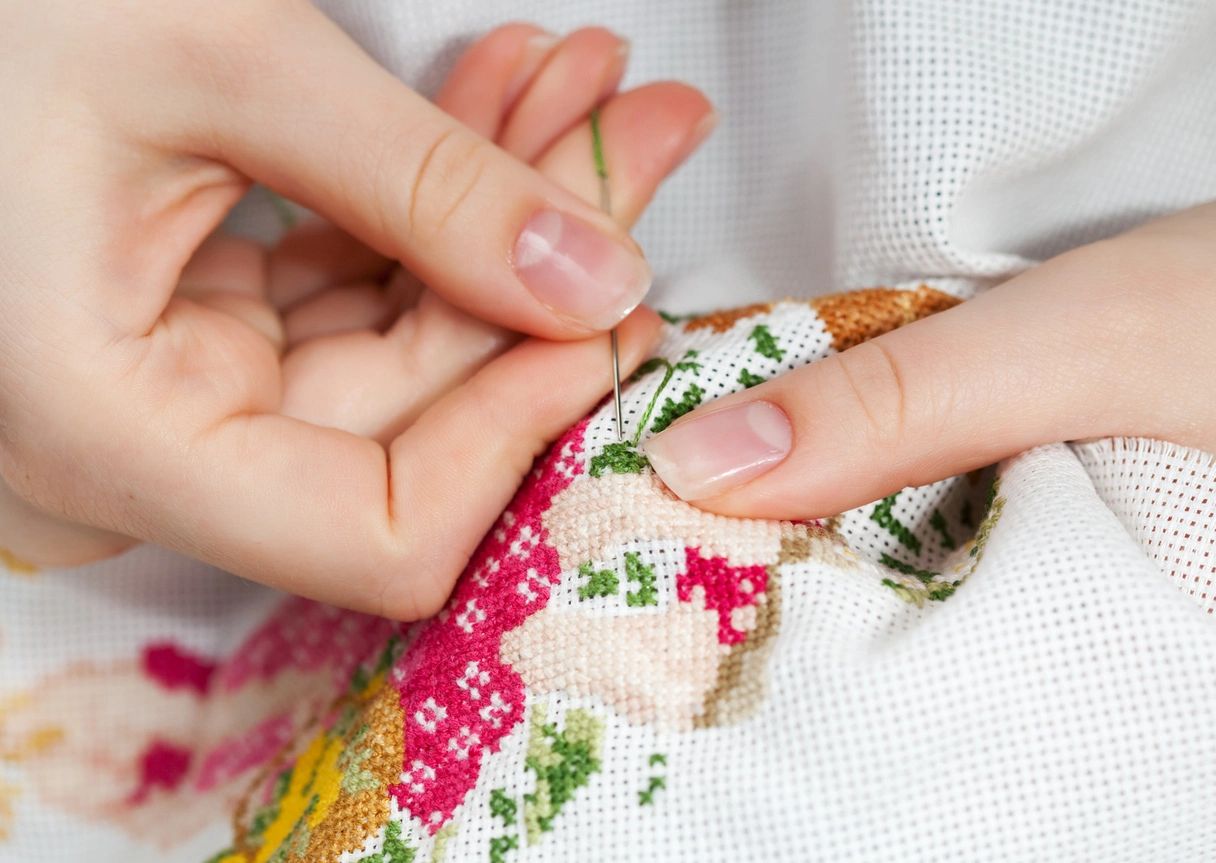
Embroidery decorates a textile with stitching
Techniques vary by material, purpose and tradition. Start by understanding the stitch and fabric structure, then study a documented example rather than assigning one technique to an entire culture.
Common techniques to explore
- Running and back stitches for lines.
- Cross-stitch for counted patterns.
- Satin stitch for filled areas.
- Chain stitch for linked lines and fills.
- Couching to secure a laid thread.
- Crewel work using wool embroidery thread.
Choose the fabric and support
Match needle, thread and fabric to the design. A hoop or other support may help control tension, but the correct setup depends on the technique. Test stitches and washing on a sample.
Keep terms distinct
Embroidery, appliqué, beadwork and resist dyeing can appear together, but they are different methods. Free-motion machine embroidery also needs the appropriate machine setup and support; it is not defined simply as sewing without a hoop.
Learn from collections
The V&A embroidery collection offers documented examples from many places and periods. Credit the source when adapting a design and consider the meaning of culturally specific motifs.
Plan dyed thread carefully
Thread composition determines dye compatibility. Complete the specified afterwash and check color transfer before stitching onto a contrasting fabric.See our dyeing supplies guide for suitable project options and affiliate disclosures.