Assess the whole fit first
Taking in a seam changes more than circumference. It can affect balance, movement, pockets, closures, sleeves and lining. Try the garment on and identify the specific problem before sewing.
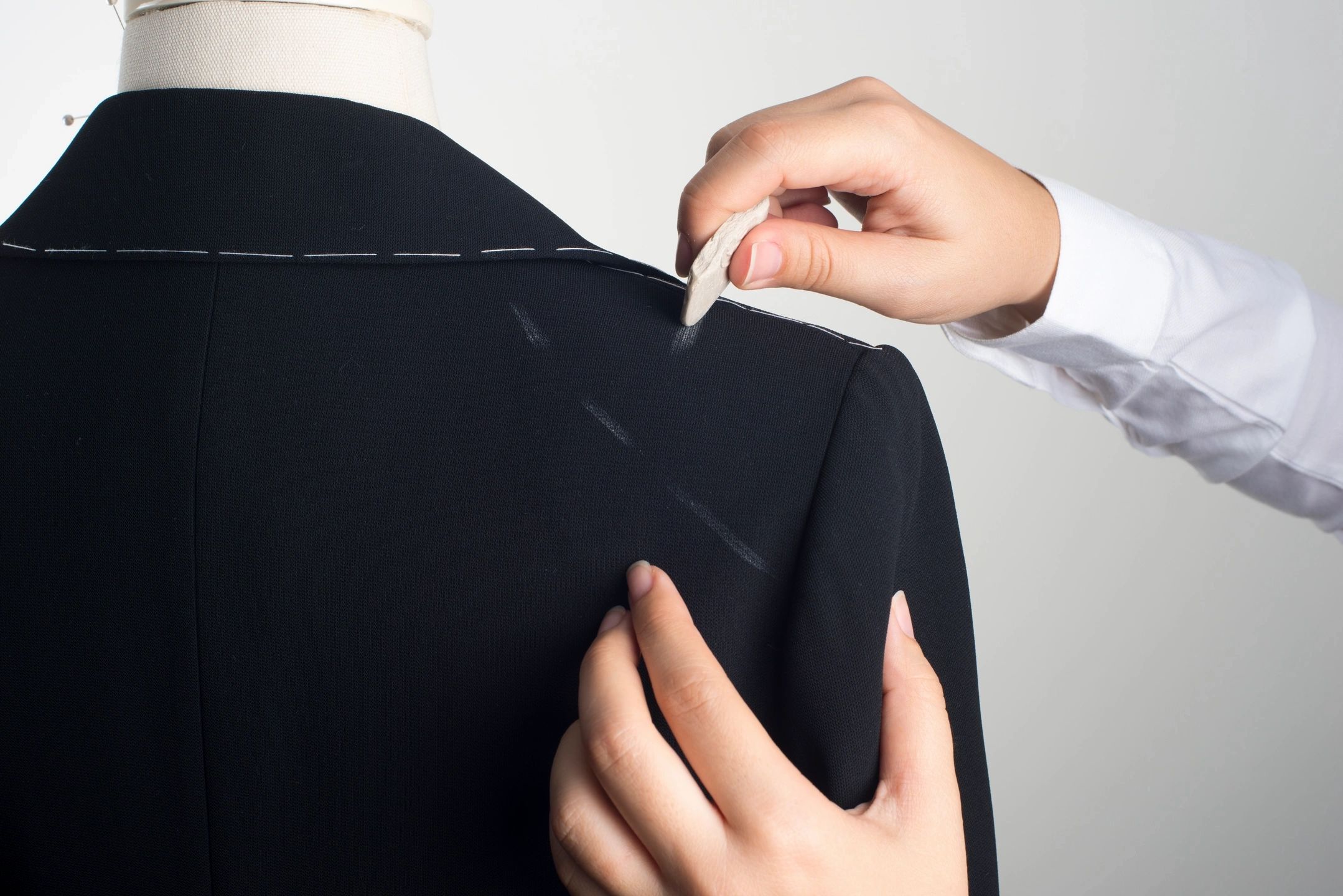
Mark a proposed change
Measure and mark carefully, keeping enough ease for movement. Remove the garment before sewing. Baste or use another appropriate temporary method so the fit can be checked before trimming fabric.
Different areas need different methods
Waist changes may involve darts, waistband and closures.
Side seams can affect pocket placement and garment balance.
Shoulder changes may require sleeve and armhole work.
Sleeve changes must preserve useful movement.
Retain allowances until fit is confirmed
Do not trim away the available fabric before trying the alteration. Finish seams appropriately and press within the care label’s limits. Keep both sides balanced where the design requires it.
Use professional help for complex pieces
Tailored jackets, lined garments and detailed occasion wear may need specialized construction knowledge. A simple instruction to overlap every seam is not an adequate method for all of them.
Plan dyeing and alteration together
Color processing can change dimensions, and new thread may not take the same dye. Discuss the sequence before finalizing fit.
Planning a color change?
Request a professional dyeing assessment with photos, fiber labels, the current shade and target color. For a suitable home project, our supplies guide includes product limits and Amazon affiliate disclosures.