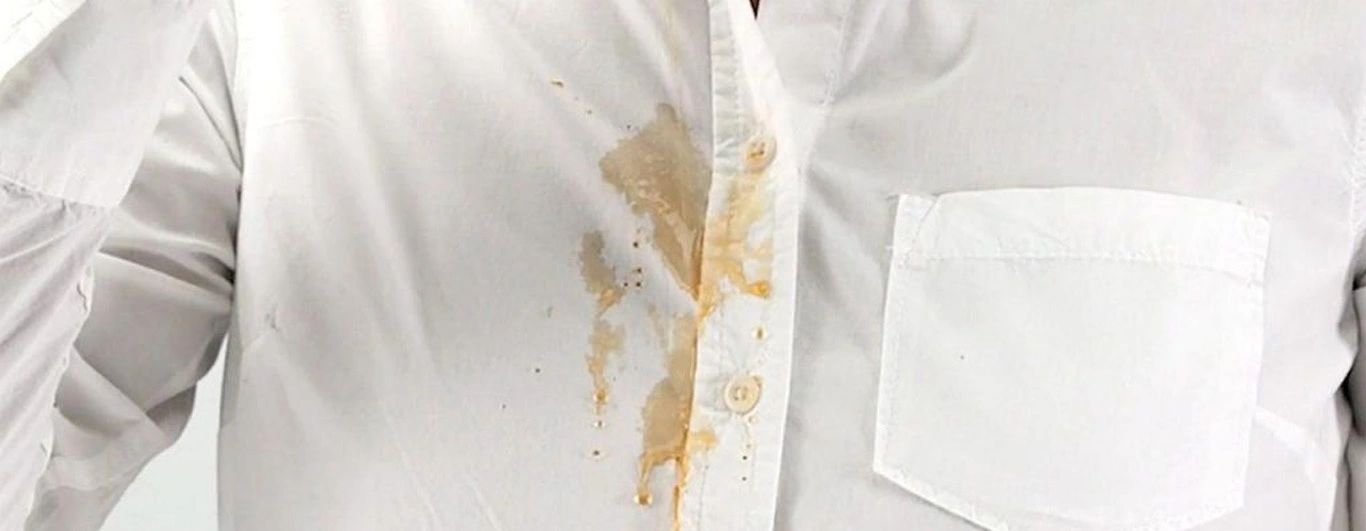
Choose a stain treatment by both the stain and the garment’s care label. One household recipe is not suitable for every mark or material. Identify what was spilled and when before applying a product.
Check whether home treatment is appropriate
Read the care label and inspect colorfastness, trims and construction. For delicate, valuable or dry-clean-only clothing, explain the stain and any treatment already attempted to a professional cleaner.
Remove excess material gently
Lift loose solids without scraping the fabric aggressively. Blot liquid with a clean absorbent cloth where appropriate instead of spreading it by rubbing. Do not soak a garment merely because the stain is fresh if its care instructions prohibit that treatment.
Match the treatment to the stain
Blood, grease, ink, mud and beverages need different decisions. For washable fabric, the American Cleaning Institute’s stain guide gives stain-specific procedures. Follow its cautions together with the garment and treatment-product labels.
Test, treat and inspect
Test the chosen product in an inconspicuous area. Follow its dose and contact time instead of combining salt, baking soda, solvents and cleaners into a universal mixture. Wash as allowed, then inspect the mark before dryer heat or ironing.
Know when to stop
If color changes, texture becomes damaged or the stain persists, stop experimenting and seek assessment. Tell the cleaner which products were used. Never mix cleaning chemicals; incompatible combinations can be hazardous.
Can dye cover a remaining stain?
Not reliably. Stains and damaged areas may absorb color differently or remain visible after dyeing. Read our garment dyeing guide before treating dye as a stain-removal solution. A dyeing company needs photos and labels to assess that option.