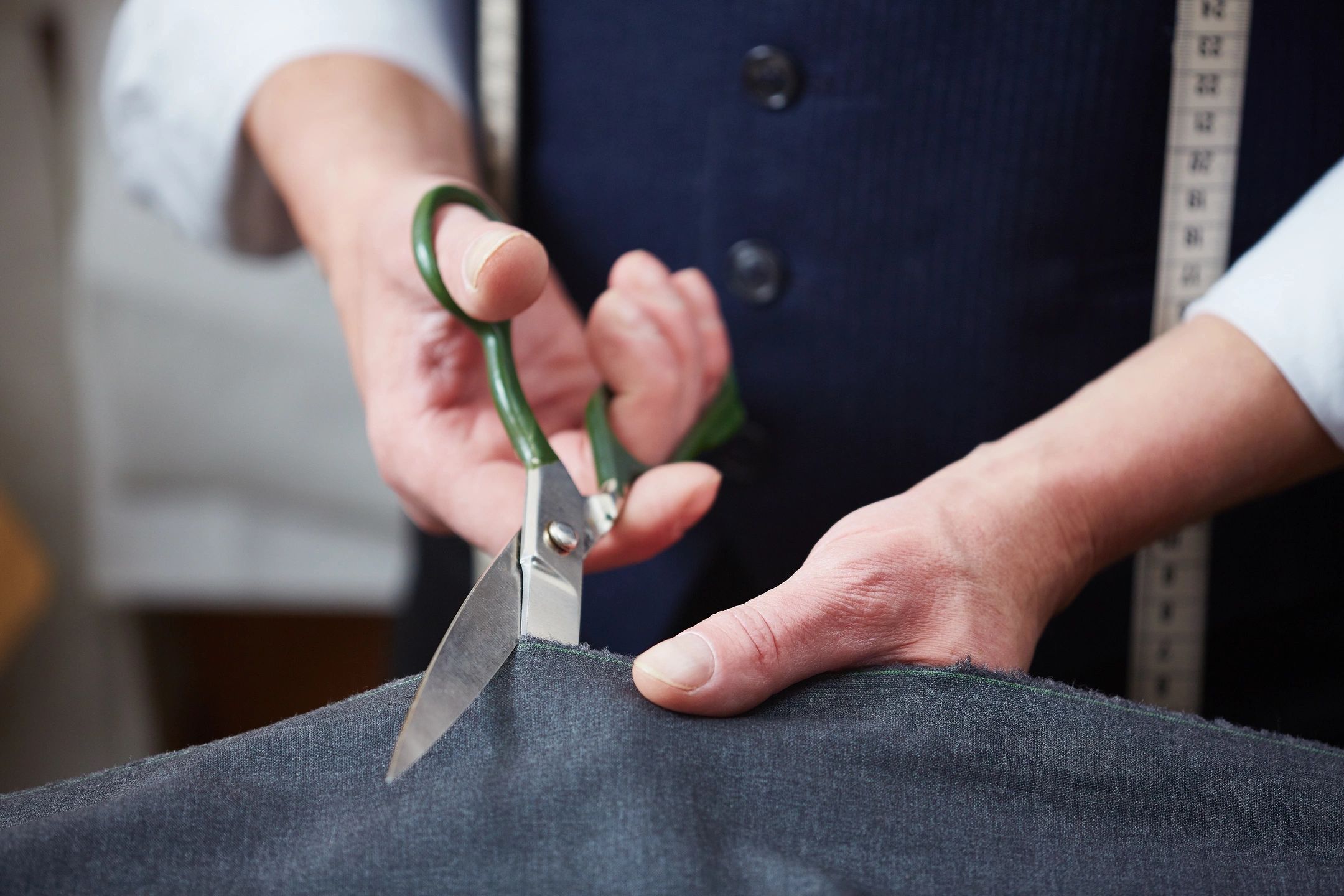
A clean cut does not permanently stop fraying
Woven fabrics can shed yarns at a raw edge. Sharp tools improve cutting accuracy, but a lasting solution usually involves an edge or seam finish appropriate to the fabric and project.
Cut accurately
- Use suitable sharp shears or a rotary cutter and cutting mat.
- Support the fabric on a stable surface.
- Follow the pattern’s grainline and cutting instructions.
- Avoid stretching or repeatedly handling vulnerable edges.
- Keep blades guarded or closed when not in use.
Choose an appropriate finish
Options include an overlocked edge, zigzag finish, bound edge, enclosed seam or hem. The best choice depends on weight, bulk, appearance and use. Test the finish on a scrap with the same layers.
Pinking has limits
Pinking shears can reduce fraying in some woven fabrics, but do not enclose the edge. They may be insufficient for loosely woven cloth or frequently laundered seams.
Keep grain and heat advice accurate
A cut cannot be perpendicular to both warp and weft at once. Use the required grain direction rather than a universal rule about cutting against the weave. Do not use an ordinary iron to melt synthetic edges as a general sewing method.
Plan around dyeing
If you intend to dye the fabric, assess shrinkage and color before final cutting where practical. Make allowances according to the pattern and test results.Find more sewing and fabric guides for project planning.