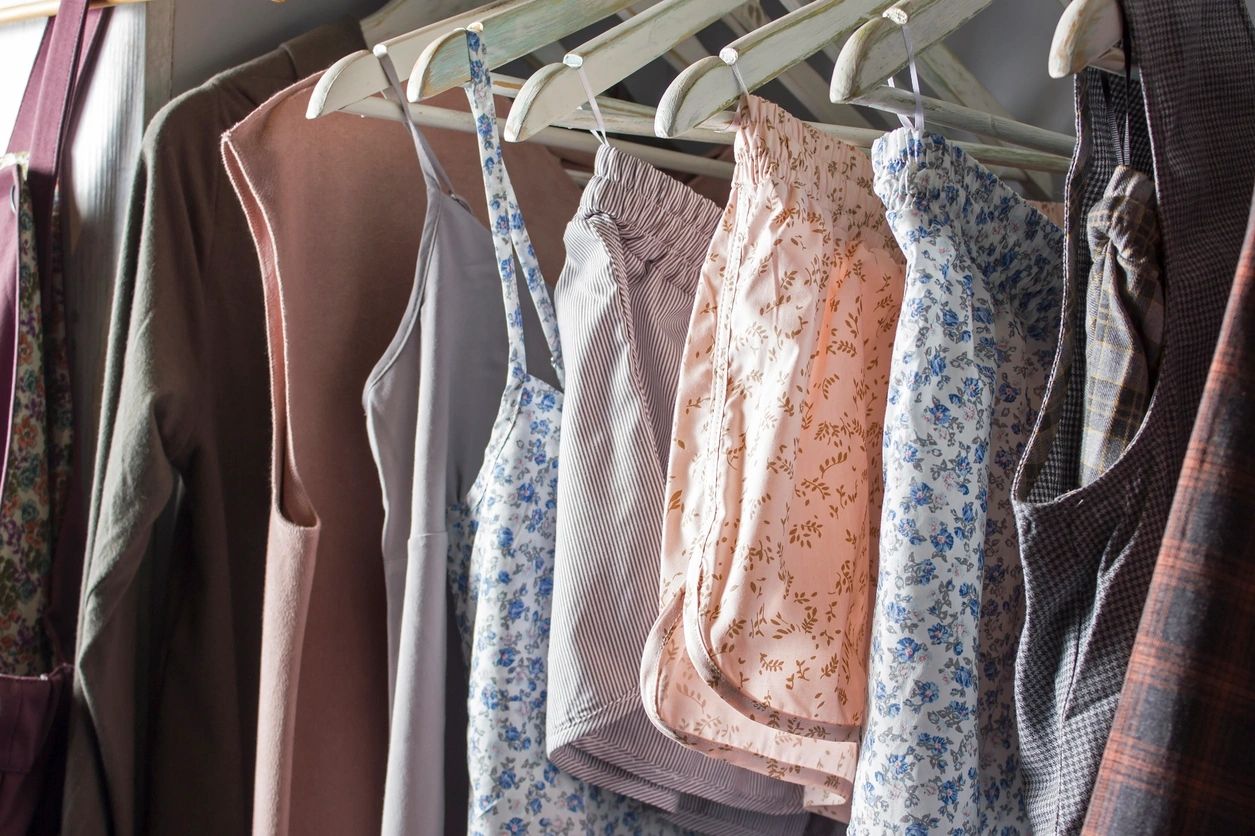
Choose a refresh method by the actual problem. A garment with loose stitching, a stain or fading needs a different decision in each case. Inspect its condition and care label before trying products or changing its color.
Clean what can be cleaned
Identify marks and use a treatment compatible with the fabric and care instructions. Residue and dirt are different from missing dye. Lemon juice, vinegar and a general “color booster” do not reliably restore color lost through fading.
Repair before making a cosmetic change
Check seams, buttons, hems and worn areas. Simple repairs or a suitable alteration may make an item useful again without dyeing. If the fabric is weak, a new shade will not fix its strength.
Remove pills cautiously
A fabric shaver or comb can help on suitable textiles, but it can also cut fragile yarns or raised details. Read the tool instructions and test a small area. Keep the cloth supported and stop if the surface becomes damaged.
Consider fit and reuse
A tailor may be able to adjust a hem or seam. Fabric from an unwearable item can become a smaller project if it is still sound. Before cutting, check how much usable material remains and whether it will meet the new project’s needs.
Evaluate dyeing separately
Check fibers, construction, current shade and care limits. A representative sample helps assess the proposed color and process. Dye may refresh a suitable item but cannot guarantee an even result over stains or faded patches.
Read our garment dyeing guide and compare clothes dyeing services. For important pieces, send photos and labels with a quote request.