FIT · COLOR · WEAR IT AGAIN
Make a dress work for your next occasion. Explore wedding gown dyeing, bridesmaid dress color changes, prom and evening dress alterations, and ways to restyle a gown you already love.
Do you need dyeing, alterations or restyling?
Change the color
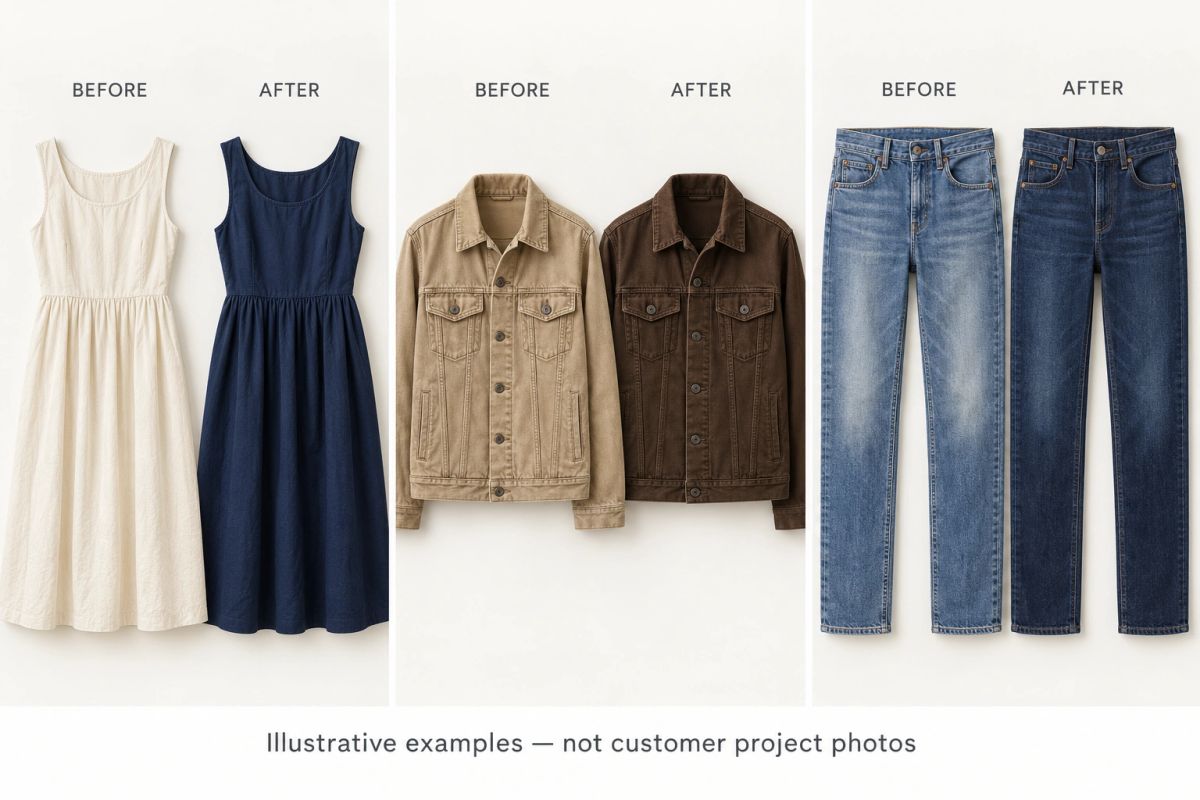
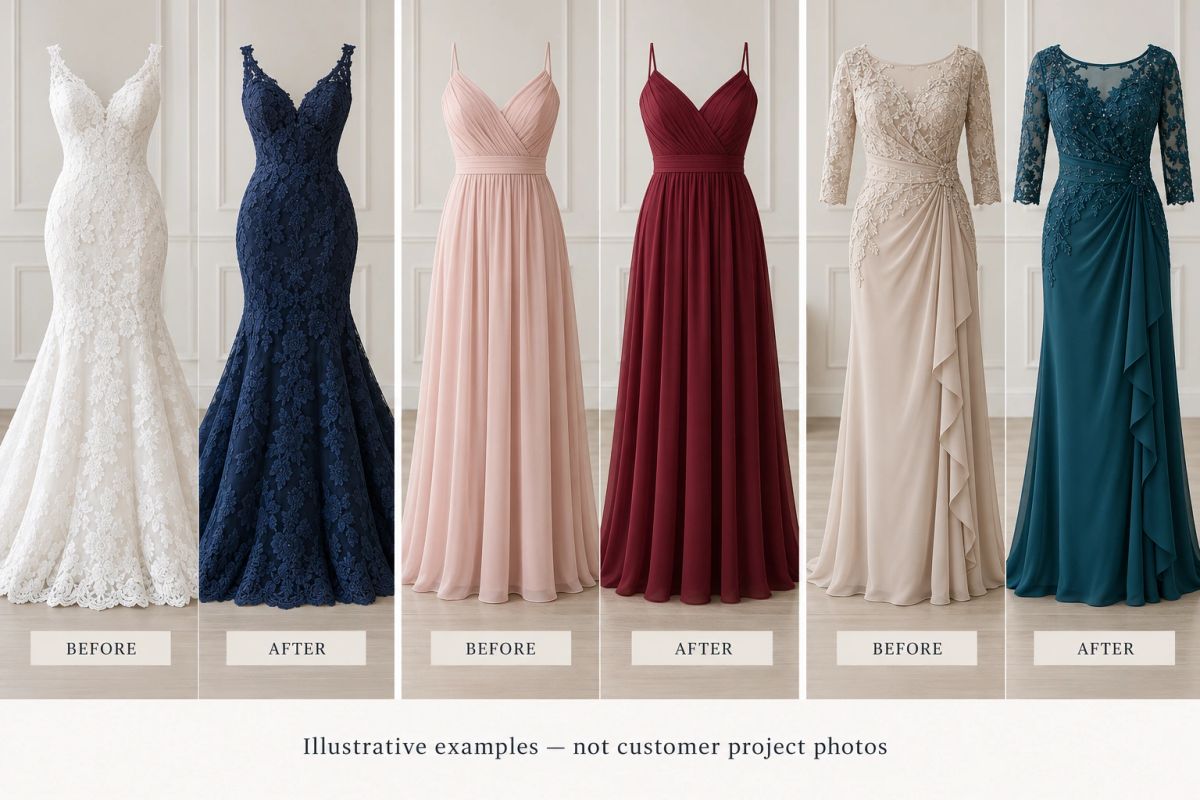
Dyeing changes the color of suitable fabric. Start with the fiber label, current shade and target color. A specialist needs to assess every layer and trim before accepting a gown.
Find dress dyeing services →Improve the fit
Alterations can adjust a hem, straps, bodice or waist and add a bustle. The fabric, seam allowance and construction determine what is possible.
Browse alteration specialists →Wear it a new way
Restyling may shorten a gown, change sleeves or a neckline, or rework an heirloom dress. Ask a dressmaker which changes preserve the details that matter to you.
Find gown restyling options →Planning both color and fit changes? Ask your dyeing specialist and seamstress to agree on the sequence before work begins. Cleaning, sampling, heat exposure and replacement trims may affect the final fitting.
Plan around your dress and occasion
Wedding dresses
Photograph the gown, lining, lace, beadwork and care labels. Tell the specialist whether the dress is for your wedding or a later reuse project. Discuss any irreplaceable details before choosing a treatment.
Bridesmaid dresses
For a group color change, compare each dress’s material, original shade and production batch. Matching the target color on different fabrics needs an agreed sample, rather than a screen color alone.
Prom & evening dresses
Check layered skirts, stretch panels and embellishments. A hem or strap adjustment may solve the problem without a color change; a darker shade may make a suitable dress easier to wear again.
Mother-of-the-bride & groom
Bring the jacket or coordinating separates to the consultation. Ask about sleeve length, comfortable seated fit, and whether all pieces can be altered or recolored consistently.
Reception & wedding guest dresses
Plan for dancing, sitting and the shoes you will actually wear. Consider a shorter hem or a new color for future events, with enough time for the final fitting.
Vintage & preowned gowns
Ask for an inspection of old seams, lining, stains and fragile fabric. Discuss achievable resizing and restyling before buying a used gown that needs extensive work.
Can a wedding or occasion dress be dyed?
Some dresses can be dyed, but the answer depends on their fiber content, construction, finish and condition. “Satin,” “chiffon” and “lace” describe a fabric’s structure or appearance; they do not tell you whether it is silk, polyester, nylon or another fiber. Read the actual material label.
| What to check | Why it matters | What to ask |
|---|---|---|
| Outer fabric and lining | Different fibers can need different dyes and may develop different shades. | Can you test the actual fabrics, including the lining? |
| Polyester and synthetic blends | They may need a specialist dye and heat process that a finished gown cannot tolerate. | Will the process suit the complete dress, rather than only the fabric? |
| Thread, lace and embellishments | Stitching or trims may stay the original color or react differently. | What will happen to seams, beads, appliqué and closures? |
| Existing color and stains | The starting shade affects the result. Dyeing does not reliably hide stains or uneven wear. | Is my target shade feasible, and should the dress be cleaned first? |
For many dyeing projects, moving from a light color to a darker shade is more practical than trying to make a dark dress pale. An exact color match still needs a sample and agreement with the provider. Do not assume a black result or an even finish is guaranteed.
Base the next step on the complete material label, condition and construction. Follow the current instructions for the selected dyeing process or ask a specialist to assess the item before treatment.
A practical fitting and color-change timeline
- As soon as you have the dress: contact providers with the event date, dress photos, labels and planned changes. Ask when to book, especially during wedding and prom season.
- Before committing: agree on the scope, sample or swatch, total estimate, work sequence and expected completion date. Allow time for shipping if using a mail-in dyeing service.
- At each fitting: bring your event shoes and intended undergarments. Tell the seamstress about accessories or fit changes before the work is finalized.
- Before collection: walk, sit and move in the gown. Check the hem, closures and bustle, and ask someone in your wedding party to learn how the bustle works.
- After the event: ask about cleaning, storage and whether the dress could be shortened, restyled or recolored for future wear.
There is no single schedule for every gown. For example, Alteration Express prefers a first bridal fitting 6–8 weeks before the wedding when possible and describes 2–3 fittings. Suite Bridal recommends booking around four months ahead and beginning work around two months out. Ask your chosen provider for its own timeline.
Compare the full cost, not just the starting price
A simple hem and a layered, beaded gown reconstruction involve very different amounts of work. Dyeing may involve cleaning, sampling, shipping and replacement trims. Request a written estimate for your actual dress and deadline.
- Which alterations or treatments are included, and how many fittings?
- Are consultations, samples, cleaning or pressing charged separately?
- Are rush service, shipping, taxes or additional design changes extra?
- What happens if the sample is unsuitable or the gown cannot be accepted?
- What are the deposit, cancellation and collection terms?
Keep dyeing and alterations quotes separate when different businesses do the work. Fast Dye’s quote form is for dyeing requests. To book alterations, contact the listed seamstress or tailor directly.
Send a request a specialist can assess
Include the event date, your location, the type of dress, the fiber and care labels, photos of the front and back, a close-up of trims, and the change you want. For dyeing, add the current shade and target color. For alterations, describe the fit problem and bring the actual gown to a fitting.
Example: “I have a lined polyester bridesmaid dress in blush and would like a darker burgundy for an event on [date]. Here are photos of both labels and the seams. Can you assess suitability, offer a sample, and quote the total cost and turnaround?”
Wedding & occasion dress questions
Should I dye my dress before or after alterations?
Ask both providers to agree on the order. Dyeing or cleaning may affect dimensions, while new thread, panels or trims may respond differently to color. Do not schedule the final fitting until the relevant treatments are complete and the dress has been checked.
Can a white wedding dress become black?
It may be possible for some fabrics, but a finished gown can contain several fibers and finishes. A specialist should assess the whole dress and a sample before confirming an achievable shade.
Can a bridesmaid dress be made smaller or larger?
Taking in may be possible depending on construction. Letting out depends on available seam allowance, matching fabric and the design. A fitting is needed to establish a realistic change.
Can I use the same business for alterations and dyeing?
Only if that business confirms it offers both services for your particular dress. An alterations listing does not establish dyeing capability. Ask directly before booking.
What should I bring to a wedding dress fitting?
Bring the dress, exact event shoes, intended undergarments and accessories that affect fit. Have your event date and list of requested changes ready.
Can I restyle my wedding dress after the wedding?
A dressmaker can assess shortening, sleeve changes or reconstruction. If you also want a new color, obtain a separate dyeing suitability assessment before deciding on the design.
Prepared by Fast Dye · Research checked October 10, 2026. Planning guidance is general; the business handling your dress confirms suitability, availability and pricing.
Explore more dress dyeing advice
Can a wedding dress be dyed? · Beginner’s dyeing guide · Dyeing project checklist