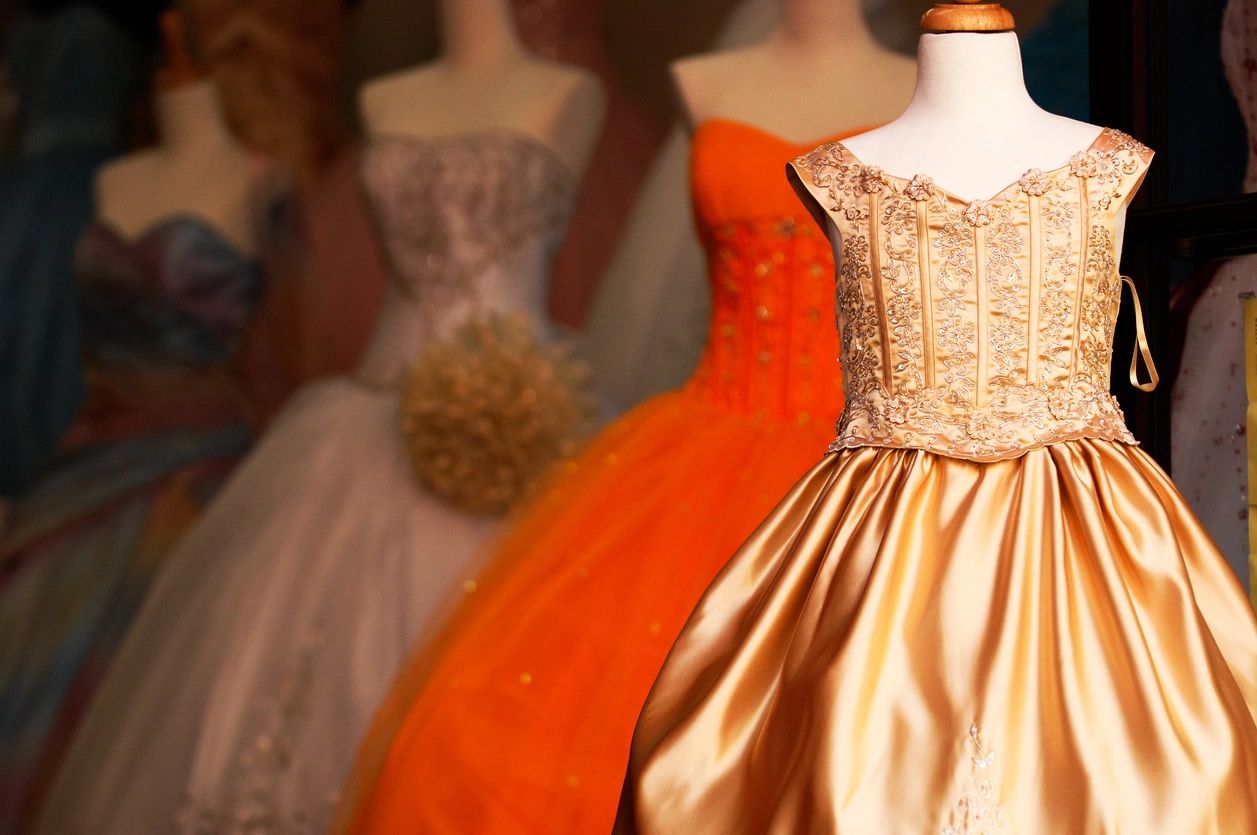
Dresses and the changing availability of color
The history of dress color reflects craft, material supply and changes in dye technology. Color meanings vary across places and periods, so a shade should not be assigned one universal social meaning.
A documented moment: Perkin’s mauve
The Science Museum holds early examples of textiles colored with William Perkin’s mauveine. Its account describes samples made with the original 1856 formula and shown at the 1862 International Exhibition. The objects offer a concrete example of how a new manufactured dye entered textile design.
Read the Science Museum’s Mauve Mania article to explore the surviving examples.
Look at the garment as well as the shade
When studying a historical dress, consider its date, region, fiber and condition. The color visible today may differ from its original appearance. A museum record can help establish what is known about its construction and dye.
Use historical references carefully
A photograph can inspire a palette without establishing an exact match. Lighting, fading and digital reproduction affect the image. For a new dress, use a physical shade reference and discuss the actual fabric with the dyer.
Recoloring a modern dress
The shell, lining, lace, stitching and trims may need separate assessment. Ask about a representative sample, shade variation and possible fit changes. Vintage or fragile garments deserve specialist advice before any cleaning or color treatment.
Request professional dress dyeing quotes with photos, labels, the target shade and event date. Our beginner’s guide explains initial suitability checks.