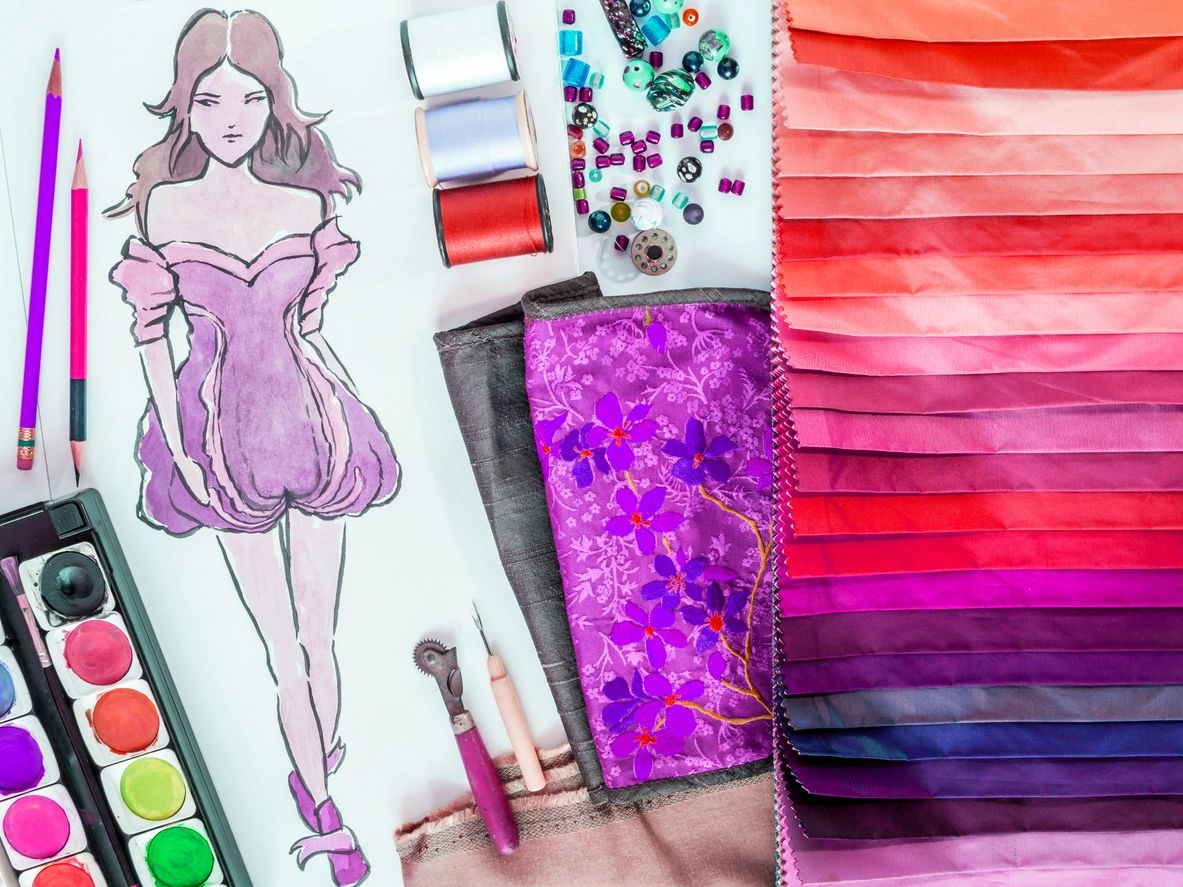
Textile design includes several kinds of work
Roles may focus on printed patterns, woven structures, knit development, color, materials or product development. Read actual job descriptions to understand the technical and creative responsibilities.
Build both design and production skills
- Drawing, composition and color development.
- Pattern repeats and appropriate digital tools.
- Understanding fibers and fabric construction.
- Sampling, testing and production communication.
- Working to a brief, budget and deadline.
Create a focused portfolio
Show the brief, research, development, samples and final outcome. Explain what you did and how the work could be produced. A few relevant projects can communicate more than a large collection without context.
Education depends on the role
Employers and programs have different requirements. Compare textile, fashion, surface-design and technical programs against the work you want to do. Laboratory access, industry projects and internships can be useful parts of that comparison.
Learn the color workflow
A screen image is not a production color approval. Understand physical standards, substrate effects, samples and supplier communication. Different fibers may require different dye or printing systems.
Explore work settings
Manufacturers, brands, studios and freelance clients may need different deliverables and business skills. For related occupational context, see the BLS fashion-design overview without assuming it covers every textile role.Our fabric dyeing directory illustrates services involved in moving from a color concept to material.