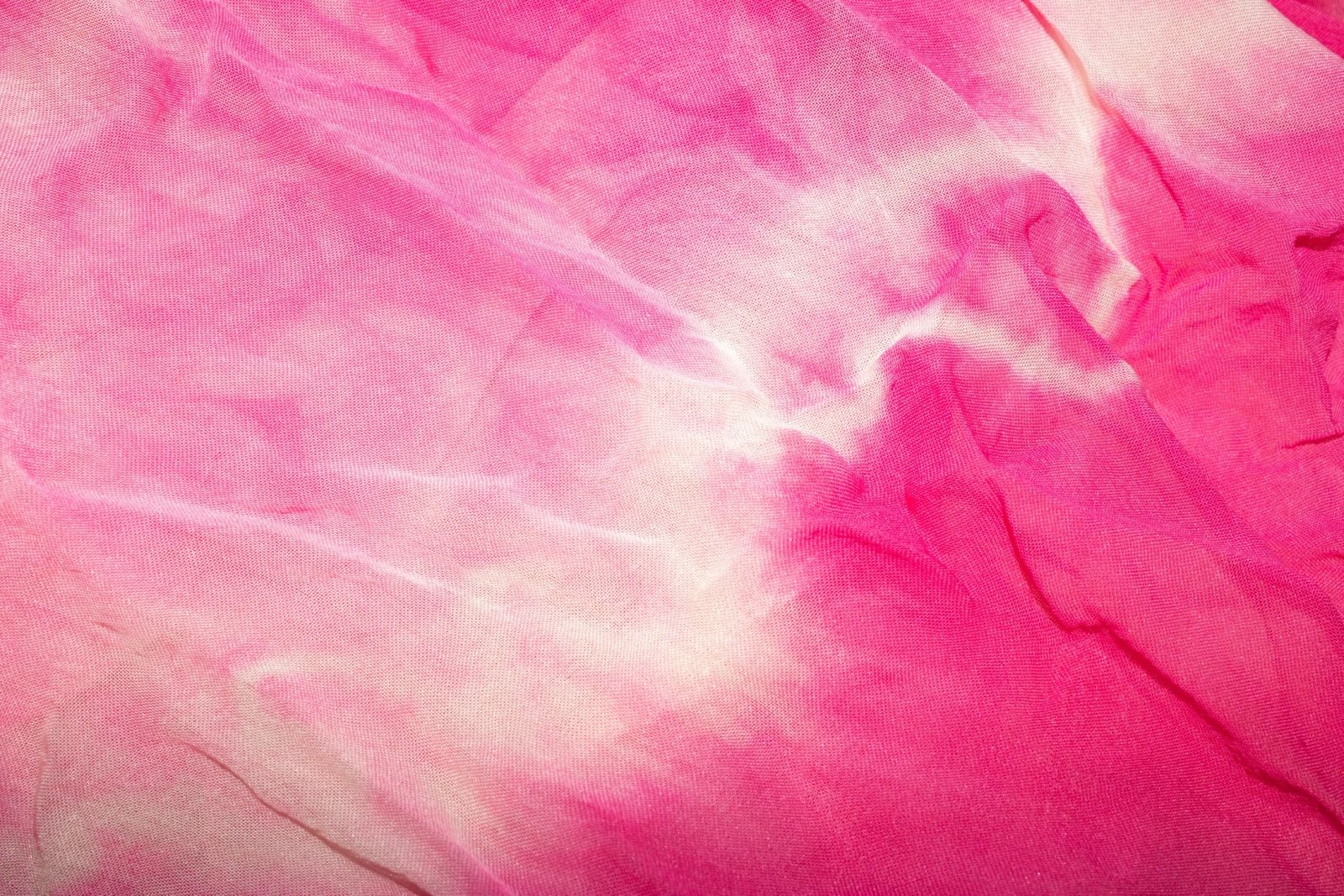
Spiral tie-dye, shaped resist and dip dye create different kinds of patterns. Choose the effect first, then select a dye compatible with the fabric and the method. Practicing on a small cotton sample is a useful way to learn before treating a garment you value.
Spiral tie-dye
A spiral fold arranges the cloth around a chosen center. Bands hold the folded shape while color is applied to sections. The fold, application and amount of color influence the pattern. Start with a manufacturer’s complete tie-dye kit tutorial, including preparation and final washing, rather than copying only its folding step.
Shaped resist and shibori
Binding, folding, stitching or clamping can restrict where dye reaches cloth. Shibori includes a range of Japanese shaped-resist practices with distinct techniques and histories. It is more useful to learn one named method carefully than to treat every folded design as the same process.
Dip dye and gradients
Partial immersion can create a boundary or gradual color change. Practice how the fabric moves through the dye bath and record the result. Absorbency, concentration and processing conditions influence the transition, so an even gradient is not guaranteed.
Prepare safely
- Check fiber and care labels, stitching and finishes.
- Protect the workspace and use the protection specified by the product.
- Keep dye utensils separate from food equipment.
- Follow the product’s mixing, fixing, rinsing and washing instructions.
- Label test samples so you can compare methods.
Choose the next project
Build confidence with small, washable items before attempting fitted, lined or valuable clothing. Our beginner’s guide covers planning. For projects needing an even overall shade, compare professional clothes dyeing services.
Learning references: Jacquard’s technique videos and the World Shibori Network’s explanation of shibori.