Check the fabric, construction and target color
Dyeing can refresh or change a dress when the material and construction suit the chosen process. It cannot guarantee a particular shade, repair damage or make every dress suitable for treatment. Start with these checks before buying dye or requesting a service.
Read the composition and care labels. Cotton, linen, silk, wool, nylon and synthetic blends need different assessment and processing. The lining, thread, lace, zips and decorative details may respond differently from the main fabric. Dry-clean-only construction or delicate embellishments deserves specialist review.
Choose a realistic target. Dye adds color to the existing shade; a lighter result may require separate color removal that is unsuitable for the garment. Stains, bleaching damage and finishes can remain visible or cause uneven uptake. A photo or screen color is only a starting reference for matching.
Test before committing. Ask a specialist to assess the complete dress and approve a representative sample where possible. Discuss changes to dimensions, feel, trims and color variation. If the dress is valuable or irreplaceable and testing is impossible, weigh those uncertainties against alteration, repair or replacement.
For a quote, send photos, labels, quantity, current shade, desired color, location and deadline. Confirm sampling, complete price, turnaround, shipping, aftercare and the provider’s remedy policy. The dress dyeing service directory helps you compare providers before choosing a treatment.
Planning a color change? Compare dress dyeing services and assessment questions, then request quotes for your dress using photos, labels and a target-color reference.
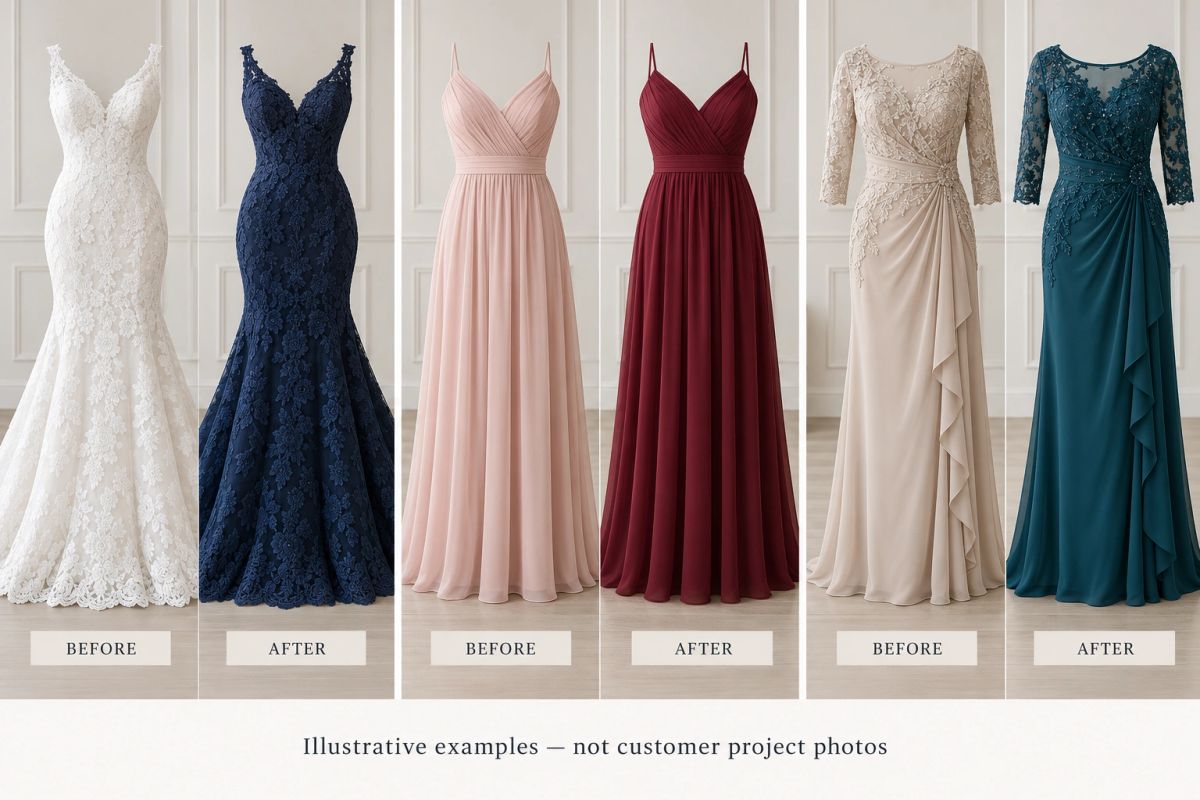
Before & after dyeing color ideas
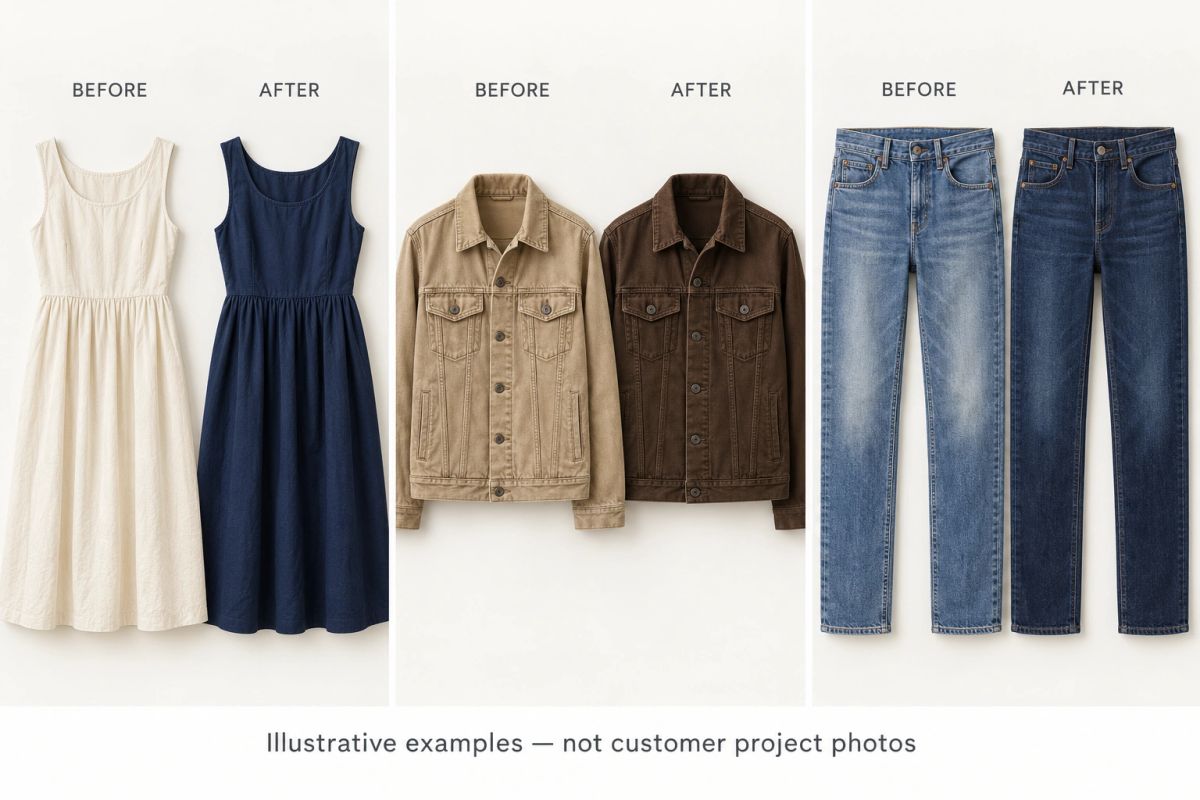
Actual results depend on the item and treatment. A specialist must assess the complete item, fiber content, existing color and finish before confirming a suitable treatment.
Clothes dyeing
Dress dyeing