These Dyeing Guidelines also constitute our Terms & Conditions of Acceptance
Read all the notes and acceptance conditions below before arranging work. Confirm the chosen provider’s process, material restrictions, sampling requirements, pricing and the conditions that apply to your order. Include composition and care labels, photographs, the current shade and the target color when requesting an assessment.
For questions about these notes, use the Contact Us page. The practical articles and FAQs elsewhere on the site provide general project guidance; review the full acceptance conditions for the proposed treatment before proceeding.
Material restrictions under these acceptance conditions
Acrylic, (dralon) and modacrylic, tencel, rame, polyurethane, polysonic, fashion weight tri-acetate, pashmina fibre blends, sheepskin and fur. Decoration & trimmings at risk are: Cast, fashion zip pullers, buttons, buckles, sequins, stones set in clasps, metal fibres and metal trim, feathers, pearl-type lacquer coated beads, plastic and glass beads/droplets, stitched-in plastic/metal bust bones and foam bust cups.
Sewing thread under these dyeing conditions
We are unable to identify the fibre compositions of threads
Colour range and reference samples
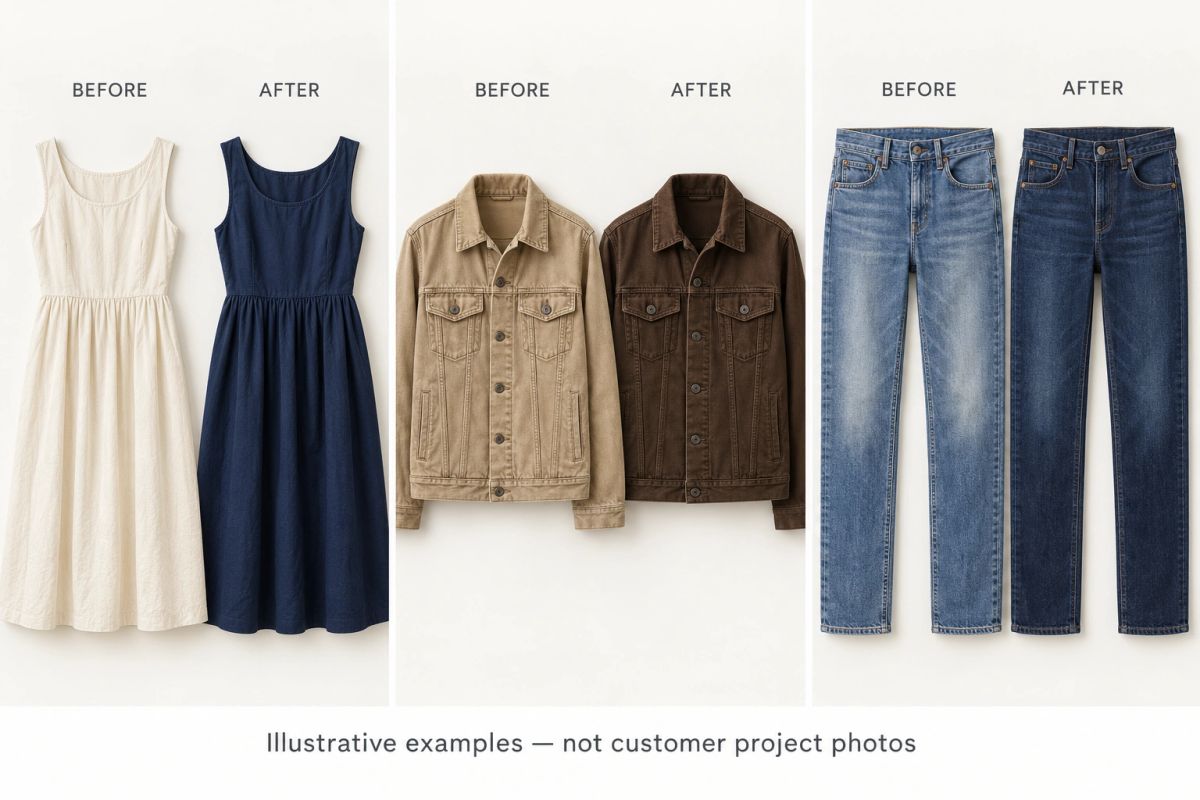
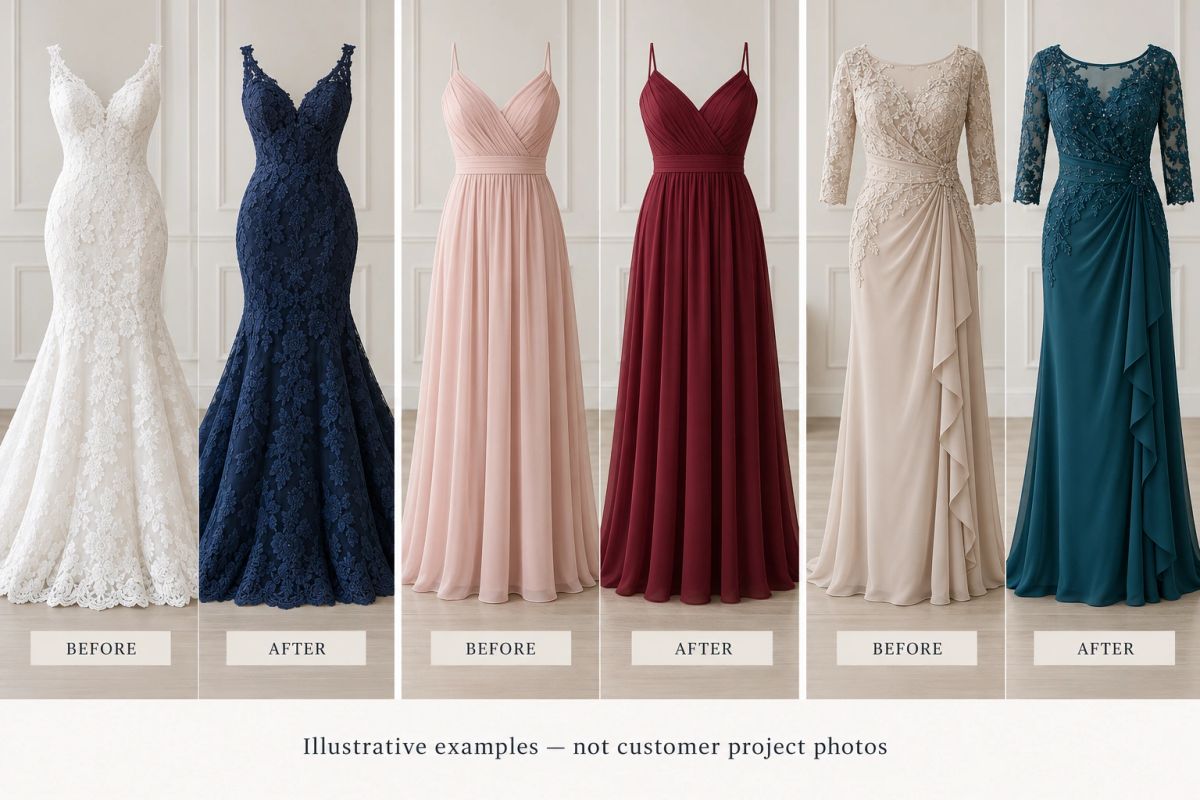
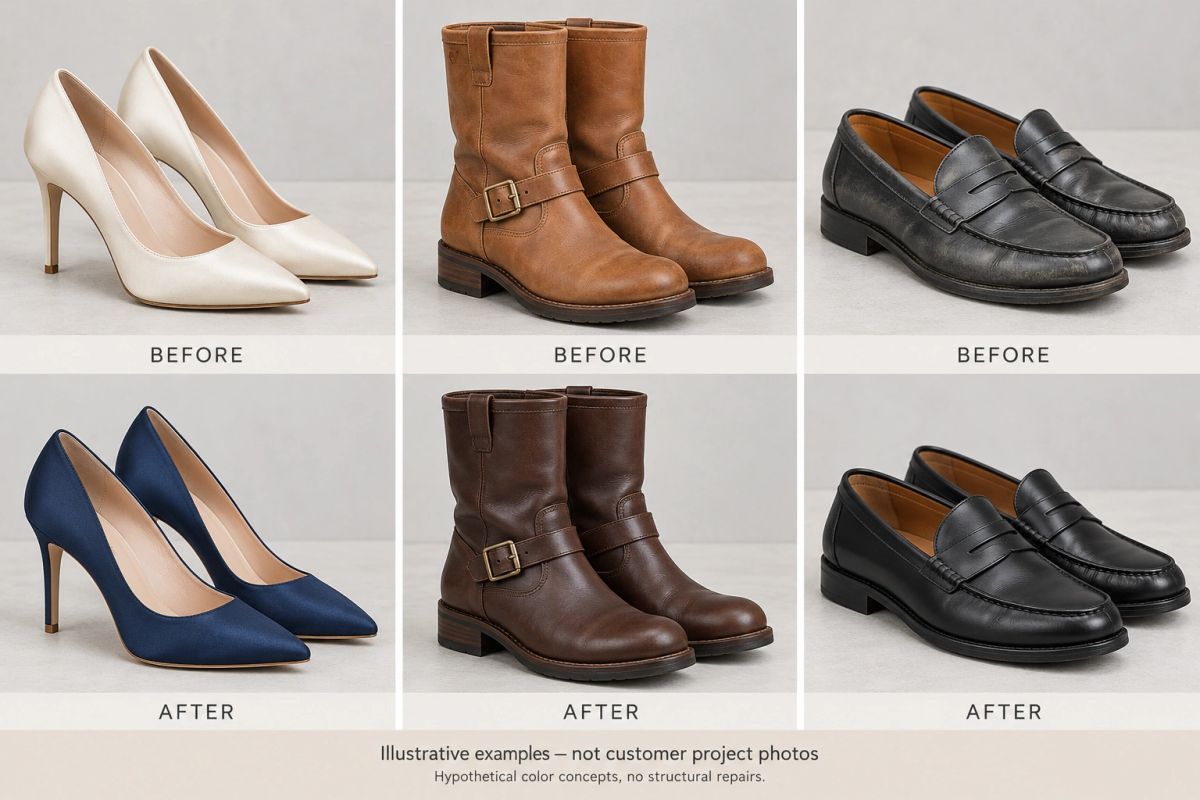
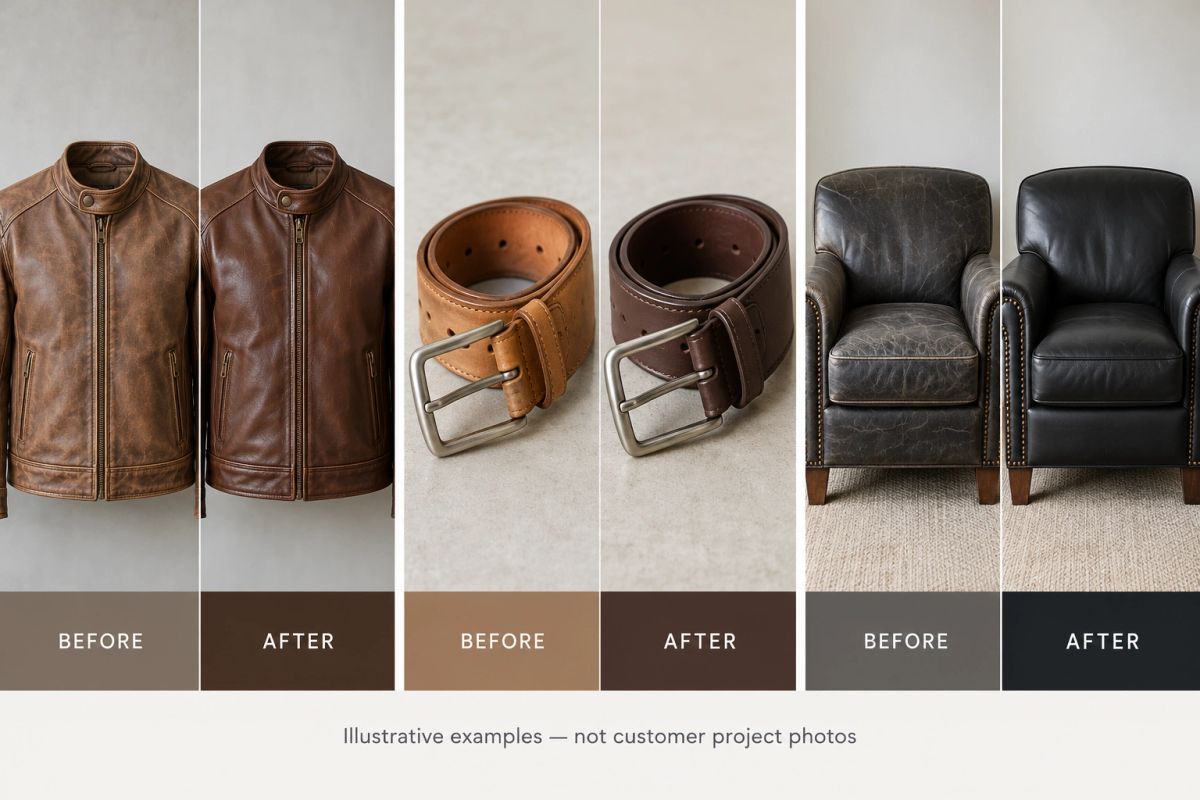
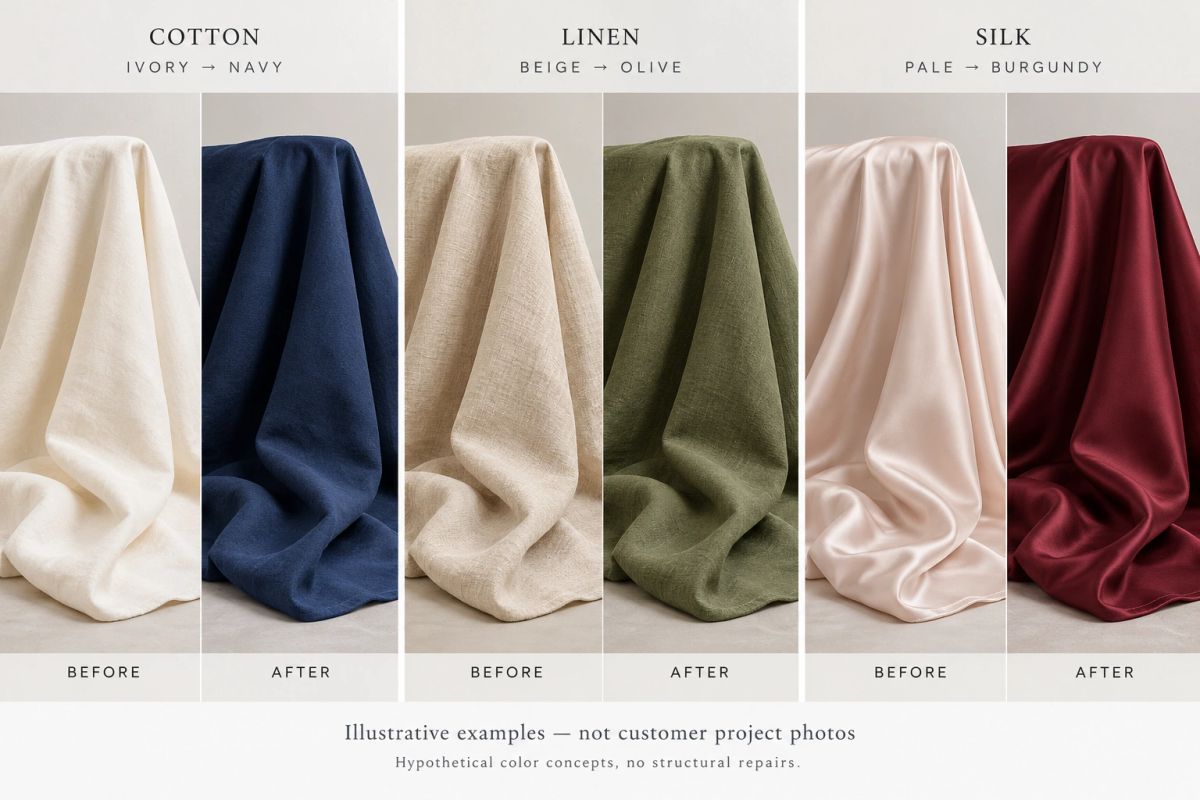
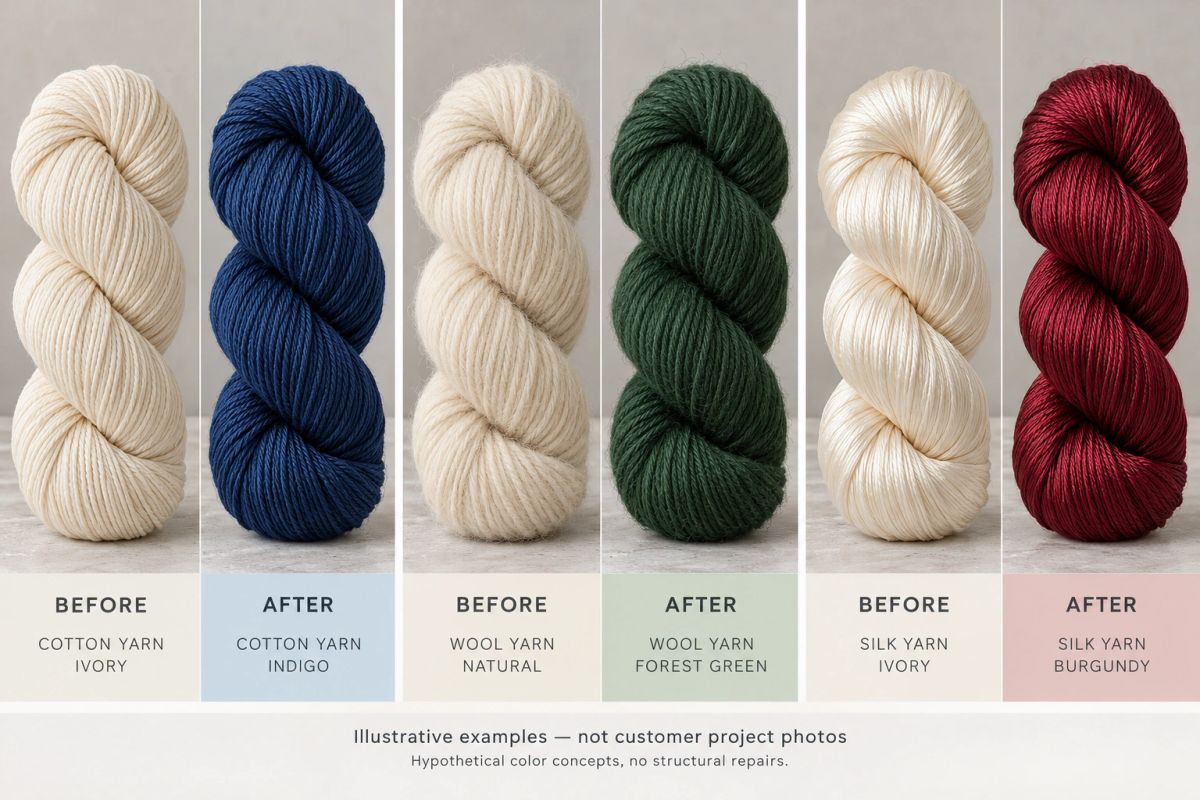
An online color chart is an approximate reference. The material, starting shade and proposed process determine what can be achieved. Supply a physical reference and ask for assessment and sample approval rather than assuming any shade can be matched.
Under these acceptance conditions, dip-dyeing and fluorescent dyes are not offered. Confirm the scope of the service and the conditions that apply to the proposed treatment directly before arranging work.
Fast Dye’s Terms & Conditions of Acceptance.
Orders are only accepted on the understanding that because our dying formula preparation costs, machine occupancy and processing time expenses are the same, irrespective of a result we regret, we cannot refund any charges (except for any uncompleted part of the scheduled processing) or accept any financial liability for the order’s subsequent physical condition, an incorrect colour outcome, any degree of shrinkage, its original or replacement value or associated consequential loss. No order can be processed without pre-payment and your signature on an accompanying Order Form acknowledging and accepting these Terms & Conditions of Acceptance which are the dyeing trade’s standard contract terms. Notwithstanding any verbal advice and opinions which will be given in good faith, our printed terms are the sole conditions of acceptance.
To comply with Consumer Legislation we are required to inform you of all the possible adverse effects and risks associated with this type of processing, no matter nearly all are most unlikely to occur. Because no manufacturer expects their garments or soft furnishings will be subsequently dyed, occasionally the design and build quality may only be sufficient for washing or dry cleaning so unless we have test dyed a sample identical by weight and volume to the order, at random an occasional adverse technical instance (listed below) could occur. However, as we take every possible care to assess orders pre-processing, we hope you will not be put off sending your items as overall, an adverse technical issue only occurs with 3% – 4% of all the different types of domestic articles we dye, and with most orders we are usually able to produce a colour very close to, if not a spot-on to the one requested.
The main technical risks are where unknowingly, different fibres and articles may contain a particular type of dye, dye-fixer or a manufacturer’s textured treatment/finish that can affect if, and how well the new dye will absorb and fix. Therefore, all colour formulas are ‘predictive’ in as, “all things being equal” the dye should take up as calculated. In some instances a new colour may look different in daylight and different artificial lighting. (As this a subjective issue we are always willing to consider a re-treatment). Other issues affecting colour/shade take-up may be an original, fixed or only part-discharging dye or a resistant-absorbing manufacture’s treatment (which could be a modified starch, silicone finish, fluorescence, fire- retardant, resin-type overall, or a printed pattern or a double-sided stain/water resistant treatment.
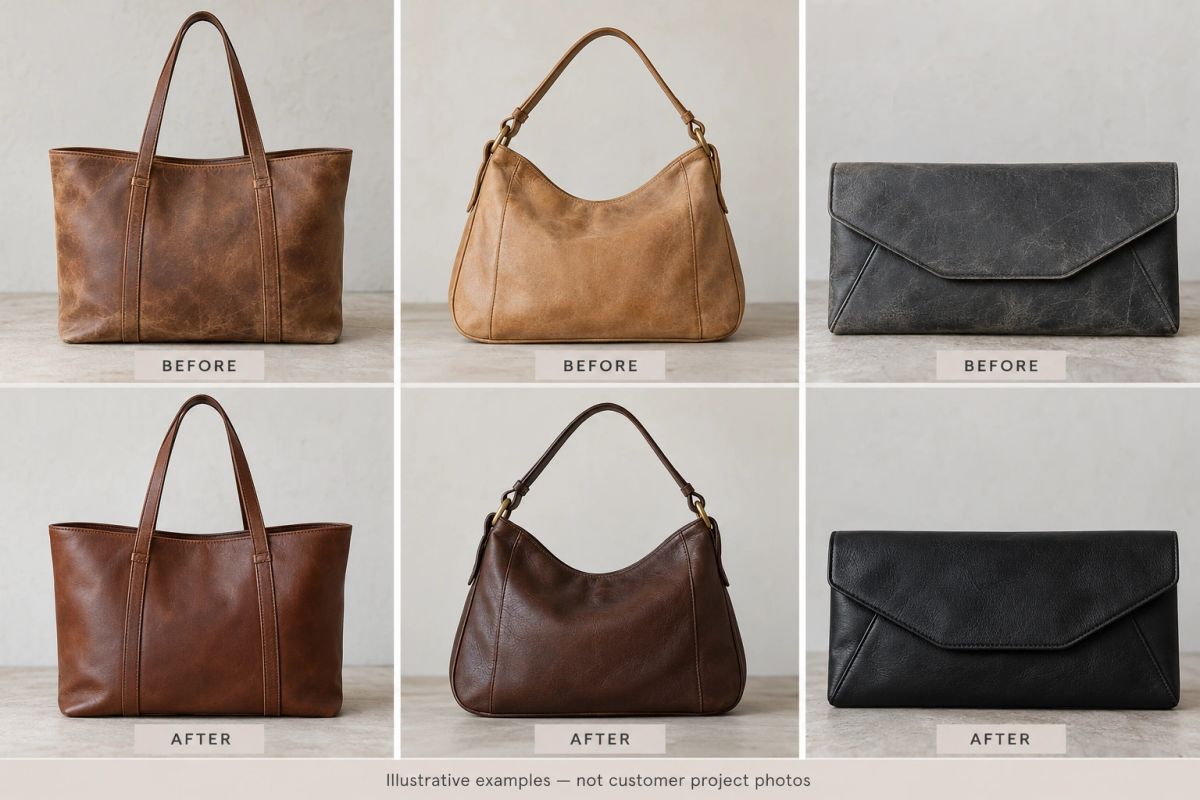
Most faded areas do not usually level with un-faded areas in any colour, no matter how dark though it may reduce the contrast a little and might produce a two-tone effect in the new colour. The exception, if the fade is not too severe is to dye to black as uniquely, it can often level or near level faded areas as we can usually get more depth of dye into the material.
Where additional colour adjustments or other processing is required, apart from taking more time, with some orders there can be a statistically small increased physical and/or shrinkage risk.
For the reasons above, some medium & dark colours may reproduce lighter in shade than requested and might not deepen any more even with further processing. Although unusual, for technical reasons a different colour or shade to the one chosen can appear, most usually on silks but can show in other materials.
Suite covers sets, curtain sections and even a single garment have occasionally been known to show shade variations in different panels where a manufacturer has used more than one roll of material or offcuts. This effect would not show up after dry cleaning or washing, but dyeing can expose the difference. Remedying such problems are not possible.
Patchy, uneven dyeing and random marking from piece to piece and even on one section of material will be due to a pre-existing condition such as fade, oxidised stains not showing pre-dyeing or an unevenly applied manufacturer’s treatment/finish* (such as a permanent fire retardant) where the dye may concentrate in places, often in particular areas and around seams and beaded edges. There is no way to overcome this effect.
* A manufacturer’s treatment (of whatever type) if applied unevenly will not be noticeable when items are washed or dry cleaned. This effect only becomes noticeable when the new dye picks up the unevenness.
It is important customers try to identify the fibre content of their items in the absence of a care label by checking with the retailer, supplier or maker, as unless we have tested a sample first we cannot be responsible for an unsatisfactory result or none-take up of dye where an incorrectly identified, an unknown fibre content or unlabelled order has been presented to us, (particularly as some soft furnishings may be bought as, or believed to be all cotton/linen but are unknowingly made of polyester, as may some woven coloured patterning). Satin, silk/satin, crepe, muslin and chiffon are only physical descriptions but do not state what the fibre content is. It is often used to describe polyester materials
Physical Effects & Shrinkage Factors.
Garments with front-panel interlinings and attached linings may experience a degree of differential contraction between materials. Some structured, lined garments, i.e. jackets & coats that are dry clean only are more at risk of contraction and may be relatively weaker in construction compared to washable items and darts, seams and linings may open and interlinings bubble/distort & shrink overall. Also, outer materials and linings might shrink and fray along seams if not over-locked/chain stitched. Wool Melton backing on collars will also shrink. At random, cast metal zip pullers might break.
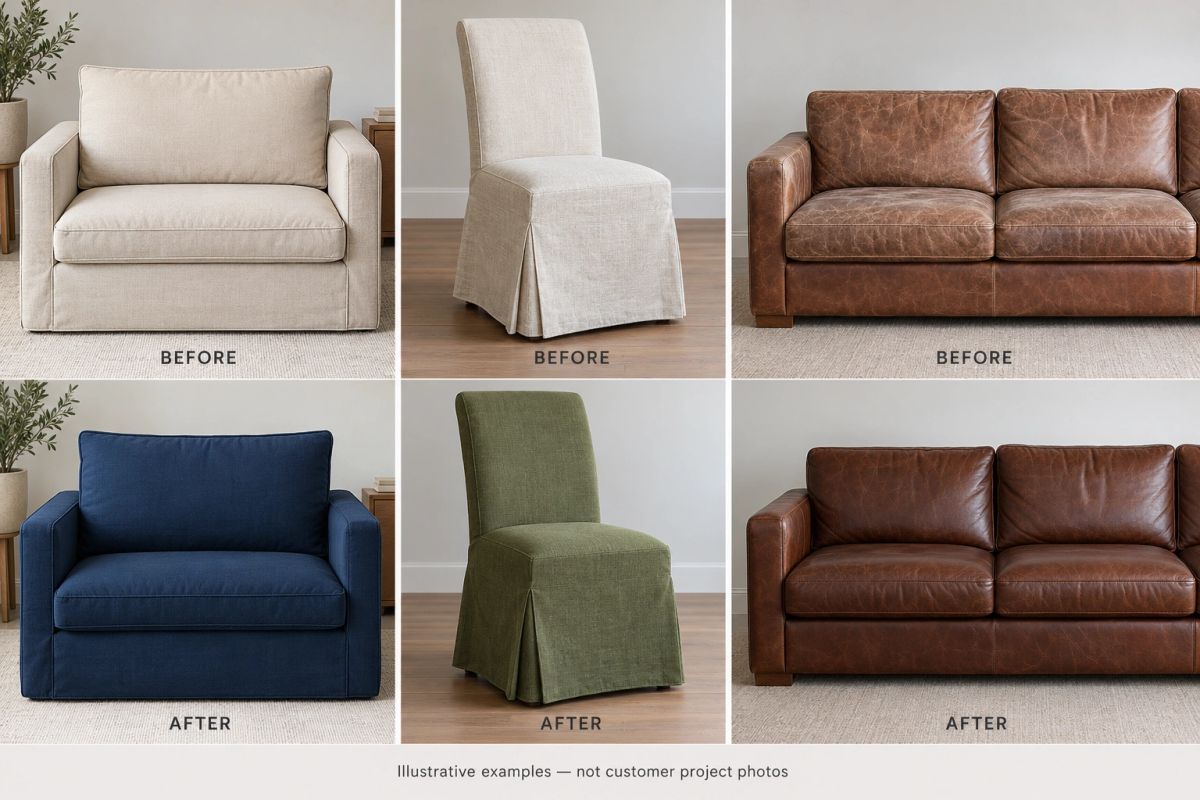
Curtains & Suite Covers. Most curtains shrink. Width will not usually be noticeable if the curtain has been made correctly whereas the length can contract about 2% – 3% though occasionally and at random it can be a bit more. Statistically, only 1% – 2% of suite covers are at risk of severe shrinkage. A small amount of contraction with suite covers is normal but is not usually sufficient to prevent re-fitting. If a cover is tight, water- mist spraying all over can often help the fabric relax and stretch back. Shrinkage amount predictions are not possible as we cannot tell if any, or how much pre-shrinkage treatment a material may have received. Some none-overlocked/chain stitched inside seams and mitred corners/side/hem stitching may be at risk of fraying. Most curtains, suite covers and cushion covers, machine washable at a min. of 30C – 40C usually have a slightly better resistance to contraction than dry clean only items, though an evaluation and prediction is not possible. Apparently sound zip seams, particularly at the ends on cushion covers can split from accumulated usage stress pressure. Stiffening in tie backs will need removing. (Removal/replacement, seam repair & zip replacement service available).
Velcro “hook” side of the strips attached to the edges of settee covers must be covered when the item is dyed (which we can do, see details under the price list) otherwise it can self-snag anywhere on the items, physically damaging the material, set heat creases if it twists up the material, and may prevent dye from absorbing evenly.
Curtain materials with a water-mark/moiré design will lose this effect. Where there is no fibre content label on curtains an inside seam may offer information. Some curtain colour printed patterns are resin-based which may prevent the dye absorbing completely or only take up in the background. (Only a test can determine). As most curtains are at risk of some shrinkage, where required, hems/linings should be let down and the seams overlocked/chain stitched to prevent fraying. (We can do this). Fragile, thinned and sun faded linings may split vertically or break up overall if unknowingly severely weakened. Items without a fabric content label and without over-locking/chain stitching on interior seams may, (only may) indicate the item is dry clean only and possibly, slightly more at risk of contraction.
Wadded, sewn-in curtain interlinings*, weights and/or thermal sewn-in insulating linings must be removed along with the normal lining so we then only dye the curtain material. Before sending, hooks should be removed but the heading strings do not need to be opened. Decorative pelmets and heading-trim may not take a true shade or if synthetic, dye at all. Braiding and tassels do not usually survive intact.
Double sided (same) materials can be at risk of seam glazing when pressed/ironed and long-term friction on fabrics, especially if containing nylon (polyamide) or if it has had a lot of localised wear can create a surface prone to bobbling and pilling, (attracting loose particles like a velcro effect). If an order does show any deterioration or shrinkage it will be entirely attributable to an inherent condition exposed or exacerbated by the processing.
Preparation and finishing questions
Ask the provider how the item should be supplied and whether it needs cleaning, repair or a representative sample first. Share any existing stain-resistant, water-resistant or other performance finishes, as dyeing can change their properties.
If a particular performance or certification is required for the intended use, confirm the proposed treatment and any relevant testing with a qualified specialist. A directory listing or color-change service is not evidence of certification. Ask about additional finishes, their durability, care requirements and full cost before authorizing work.
Aftercare for dyed items
Obtain written aftercare instructions for the actual material and dyeing process. Follow the item’s care limits and the provider’s guidance on washing, drying, detergents and any finishing or curing period. Wash separately initially if instructed and check for color transfer.
For home dyeing, follow the dye manufacturer’s complete rinsing, fixing and equipment-cleaning instructions, along with the appliance maker’s guidance. Do not use an improvised bleach-cleaning recipe or combine household chemicals. Ask the provider about the durability and care of any performance finish applied after dyeing.