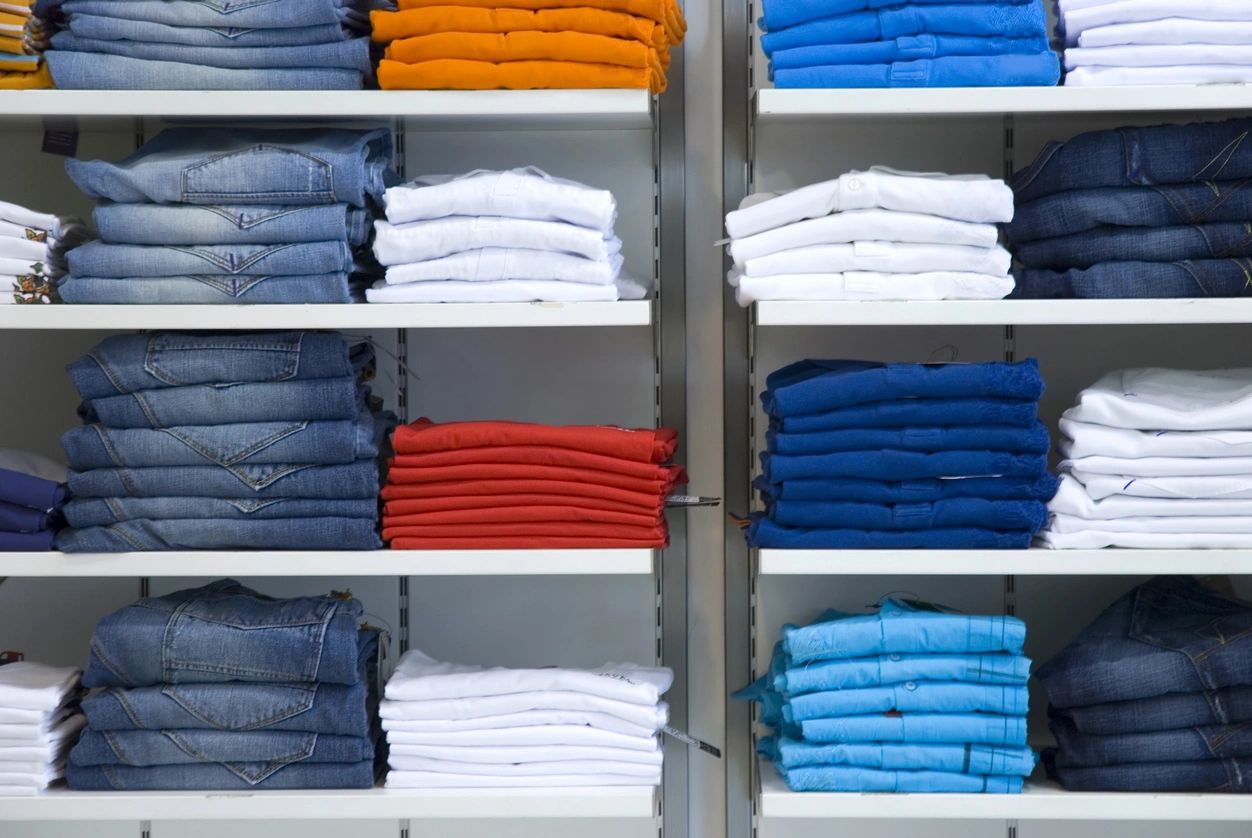
Folding can organize clothes without a universal formula
The best method depends on garment shape, fabric, available space and how often you use the item. No named fold guarantees that every garment remains crease-free.
T-shirts and everyday tops
Lay the item flat, smooth it gently and fold sleeves and sides into a manageable shape. Choose a final fold that fits the drawer without forcing the fabric into a tight bundle.
Pants and structured items
Follow an existing intended crease where appropriate. Avoid making a new sharp fold across details or decorations. Some structured garments are better supported on suitable hangers.
Knitwear
Support the weight of a sweater and fold loosely. Avoid narrow hanging points that may stretch shoulders. Do not compress textured knits so tightly that the surface is crushed.
Delicate garments
- Protect beads, hardware and other snagging details.
- Avoid pressure on pleats or structured sections.
- Use suitable clean supports or tissue where appropriate.
- Store only when fully dry.
Make items easy to find
Dividers and labeled containers can reduce repeated handling. Leave enough space to remove one item without disturbing the whole stack, and check stored clothing periodically.Explore our textile care guides for washing, pressing and color planning.