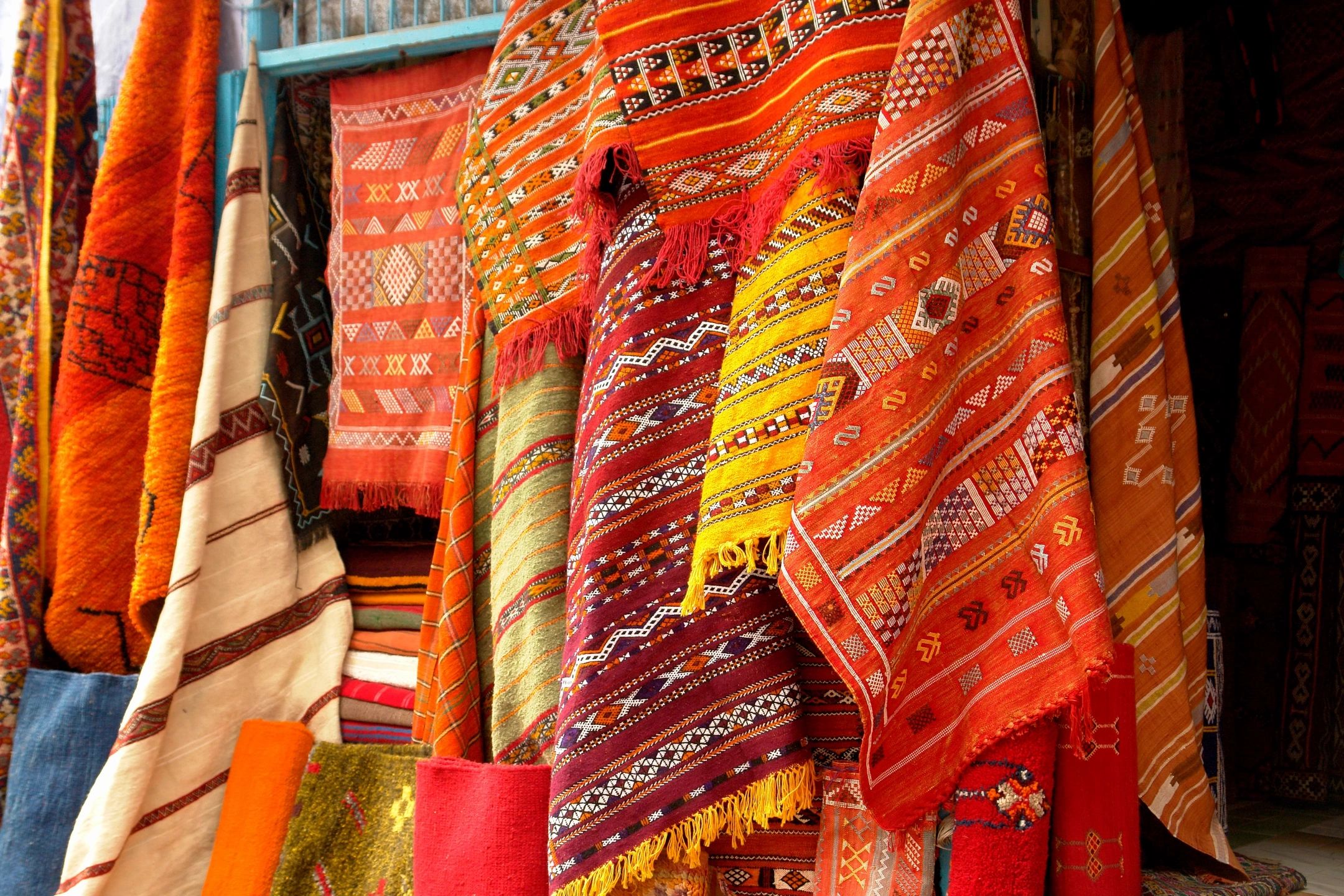
Meaning depends on a specific context
Textiles can express identity, status, belief, ceremony and personal preference. A color or fabric does not carry one universal meaning across a religion, country or time period.
Research the particular tradition
Identify the community, place and historical period.
Distinguish everyday wear from ceremonial use.
Check who made and used the textile.
Consult community sources and well-documented collections.
Avoid treating one example as a rule for everyone.
Color and pattern can travel
Trade, migration and exchange have moved materials and designs between regions. Motifs can be adapted and interpreted differently. The Met’s Interwoven Globe exhibition documents international textile exchange from 1500 to 1800.
For a present-day occasion
Ask the host or an appropriate community source about expected clothing, rather than relying on a generic list of taboos. Personal observance and local practice can differ.
For design and restoration
Credit sources and consider permission when using culturally specific designs. Recoloring a historic or ceremonial textile can alter its significance and evidence. Consult an appropriate conservation or community specialist before changing it.
Everyday color projects
For ordinary garments, record the composition and desired shade, then seek a dyeing assessment based on the actual item.